AI Call Handling That Cuts Wait Times and Costs
AI call handling gives growing teams fast, natural phone support, smarter routing, and lower service costs without sacrificing human escalation paths too.
On this page
A customer calling to ask where an order is should not have to wait six minutes, repeat an order number twice, then hear that the support team is closed. AI call handling changes that equation by answering immediately, understanding the request in natural speech, checking the right system, and resolving or routing the call without unnecessary friction.
For operations teams, this is not a novelty feature. It is a capacity layer for the moments that matter most: peak demand, after-hours calls, repetitive service requests, and leads that expect an answer before they contact the next provider.
What AI Call Handling Actually Does
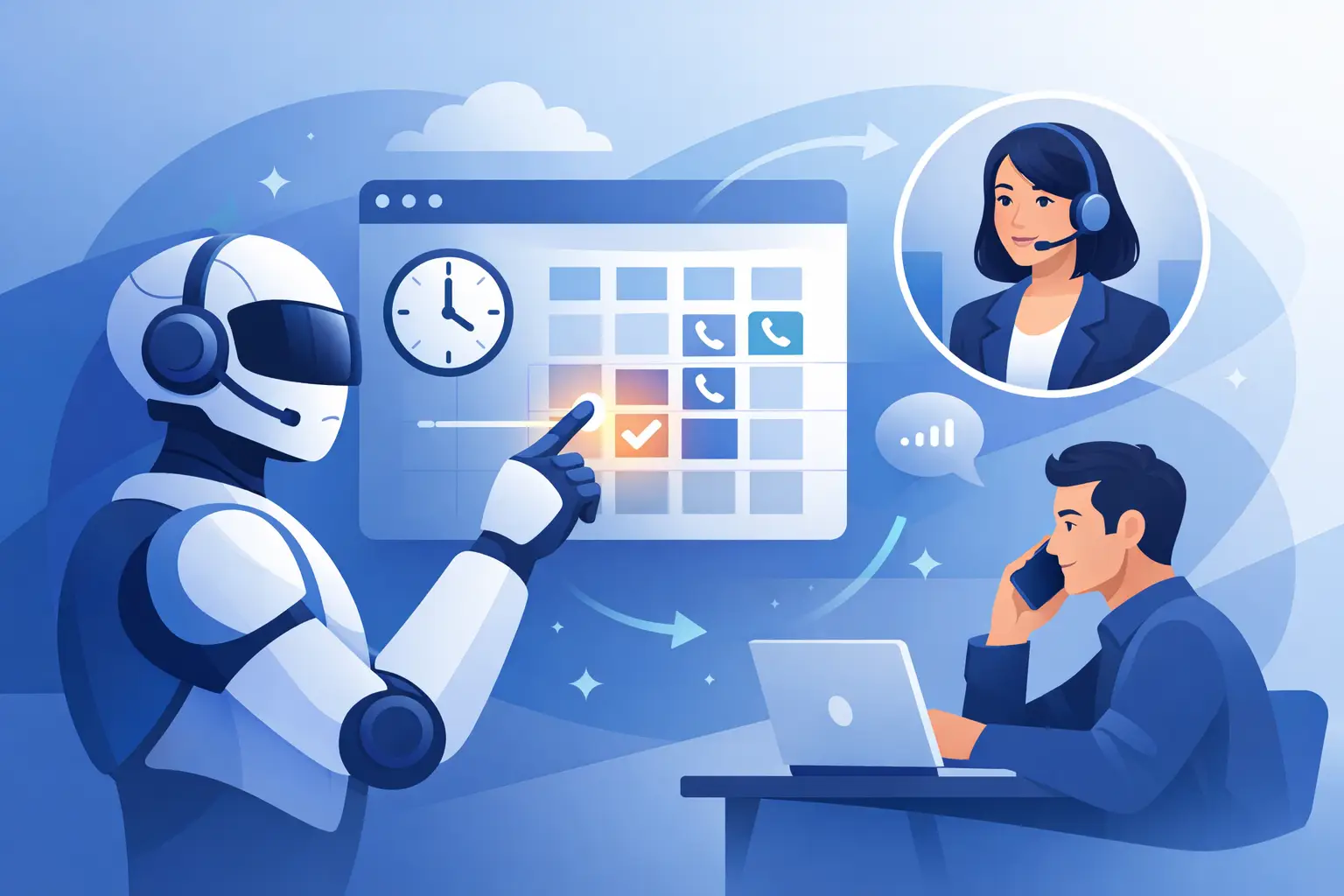
AI call handling uses conversational voice technology to receive, understand, and respond to phone calls. Unlike legacy IVR trees that force callers through menus, a modern voice agent can handle open-ended requests such as, “Can I move my appointment to Thursday?” or “I need to know whether my shipment has left the warehouse.”
The strongest systems process speech directly, maintain context across a conversation, and respond quickly enough that the exchange feels natural. They can access connected business tools, follow defined policies, capture structured information, and transfer the caller to a person when the situation requires judgment or empathy.
That distinction matters. A recorded message can deflect calls. An AI voice agent can complete useful work.
For a service business, that might mean confirming availability and booking a visit. For e-commerce, it can mean authenticating a customer and providing a live order status. For real estate, it can qualify an inquiry, answer basic property questions, and schedule a viewing. The goal is not to make every call fully automated. The goal is to make every call move forward.
Where AI Call Handling Creates Immediate Value
The business case is usually clearest where call volume is recurring and predictable. Teams do not need thousands of daily calls to benefit. Even a small operation can lose significant time to calls that require the same information, the same lookup, and the same follow-up every day.
Faster answers when customers are most likely to leave
Speed is the first advantage. A caller who reaches an agent instantly is less likely to abandon a purchase, cancel an appointment, or escalate a simple issue. AI agents can operate around the clock, which gives businesses a practical way to cover evenings, weekends, and seasonal surges without building an overnight support team.
Response speed also changes lead conversion. When a prospect calls after seeing an ad, listing, or referral, the highest-intent moment is happening now. Capturing contact details tomorrow is not the same as qualifying the need and booking the next step during that initial conversation.
Lower cost per resolved interaction
Human teams are essential for complex cases, retention risks, sensitive conversations, and relationship-driven sales. They are also expensive to use for routine status checks, rescheduling, basic qualification, and standard policy questions.
AI call handling reduces the volume reaching live agents, allowing the same team to spend more time on cases where expertise affects revenue or customer loyalty. Cost savings depend on call mix, integration depth, and escalation rates, but the operational benefit is straightforward: repetitive work no longer needs to consume every available agent hour.
Better consistency across every shift
Manual call handling varies by staffing level, training, fatigue, and handoff quality. A well-configured voice agent follows the approved script, asks required questions, applies routing rules, and records outcomes consistently.
Consistency does not mean sounding scripted. Modern speech-to-speech systems can acknowledge interruptions, clarify ambiguous requests, and adapt their wording while staying within business rules. That combination - flexible conversation with controlled workflows - is where voice automation becomes reliable enough for customer-facing operations.
The Workflows Worth Automating First
Start with calls that are frequent, easy to define, and connected to a measurable business outcome. A narrow first deployment is usually more valuable than an agent that tries to answer every possible question on day one.
For customer support, strong first workflows include order tracking, delivery updates, return eligibility, account verification, store hours, and appointment changes. These calls often require an integration with a CRM, help desk, order management platform, or calendar, but their logic is relatively stable.
For sales teams, qualification and scheduling are often the best place to begin. The agent can identify the caller’s need, location, budget range, timeline, or product interest, then book a meeting or route qualified opportunities to the appropriate representative. This reduces missed leads while keeping salespeople focused on conversations that need their involvement.
Healthcare, financial services, and other regulated industries can use voice automation too, but they need tighter guardrails. The system must be designed around consent, data handling, identity verification, recordkeeping, and escalation policies. In these environments, automation should be deliberate rather than broad.
What Separates a Useful Voice Agent From a Frustrating One
Customers do not judge AI by its technical architecture. They judge it by whether it listens, responds quickly, and helps them finish what they called to do.
Latency is central. Long pauses make callers talk over the agent, repeat themselves, or assume the line has failed. Low-latency speech-to-speech interaction creates a more conversational rhythm, especially when callers interrupt, change their minds, or provide details in an unexpected order.
The other requirement is context. A voice agent should know why the caller is calling, what it has already asked, and what happened in the connected system. If a caller gives an order number, the agent should not ask for it again after checking the status. If the caller has already stated that an issue is urgent, that signal should follow the case through escalation.
Finally, every deployment needs a graceful human handoff. Some callers will ask for a person immediately. Others will reach an edge case, express frustration, or need an exception approved. The agent should recognize those moments, transfer the call intelligently, and pass along a concise summary so the caller does not have to start over.
How to Deploy AI Call Handling Without Creating Risk
The fastest deployments are not the ones with the fewest decisions. They are the ones that make the right decisions early: what the agent can do, what it cannot do, which systems it can access, and when it must hand off.
Begin by reviewing call recordings and support tags. Look for the highest-volume reasons people call, average handling time, abandonment rate, repeat contacts, and the points where agents must leave the phone system to find information. That evidence will tell you where automation can produce a real operational gain.
Then define the agent’s scope in plain business language. For example: verify the caller, retrieve order status, explain delivery estimates, open a support ticket when needed, and transfer billing disputes to a specialist. Clear scope keeps the conversation useful and prevents the agent from improvising outside policy.
Integrations should support action, not just answers. Calendar access lets an agent schedule rather than merely request a callback. CRM integration lets it create or update a lead record. Webhooks and workflow tools can trigger confirmations, ticket creation, notifications, or follow-up tasks automatically.
Before going live, test real-world behavior: interruptions, background noise, incomplete information, accents, frustrated callers, unavailable systems, and requests outside the intended workflow. Review transcripts and outcomes weekly in the early phase. The first version should improve quickly based on what callers actually say, not what the project team expected them to say.
Platforms such as Kalem are built for this operating model, combining natural real-time voice conversations with integrations, smart call transfers, and deployment options that fit both self-serve teams and enterprise environments.
Measure Resolution, Not Just Deflection
A low number of calls reaching human agents can look good in a dashboard while customers quietly fail to get help. The better measure is whether callers complete the task they came to complete.
Track containment alongside resolution rate, transfer rate, abandonment, average time to answer, booking or conversion rate, repeat-call rate, and customer sentiment. Compare these metrics by workflow, time of day, and caller type. A high transfer rate may be acceptable for a sensitive workflow, while a high repeat-call rate is a clear signal that the agent is providing incomplete answers.
AI call handling works best when it is treated as an operational system, not a set-and-forget phone greeting. Give it clear responsibilities, connect it to the information customers need, and let human agents take over when human judgment creates more value. That is how a phone line becomes a faster, more scalable part of the customer experience.