Guide to Voice AI Compliance for Teams
A practical guide to voice AI compliance for teams deploying phone automation, covering consent, data handling, vendors, escalation, and risk.
On this page
- What voice AI compliance actually covers
- A practical guide to voice AI compliance starts with call design
- Consent, disclosure, and recording rules
- Data handling is where many teams get exposed
- Vendor selection is a compliance decision
- Build human escalation into the compliance model
- How to operationalize a guide to voice AI compliance
A voice agent can cut response times, reduce support load, and keep your phones covered around the clock. It can also create legal, operational, and brand risk fast if compliance is treated like an afterthought. That is why a guide to voice AI compliance matters before the first call goes live, not after a complaint, audit, or failed rollout.
For most teams, compliance is not one rule or one checkbox. It sits at the intersection of privacy, telecom rules, consent, data retention, security, disclosures, and sector-specific obligations. The hard part is that voice AI touches all of them at once. If your system answers calls, records audio, handles personal data, books appointments, or routes payments, you are already in regulated territory.
What voice AI compliance actually covers
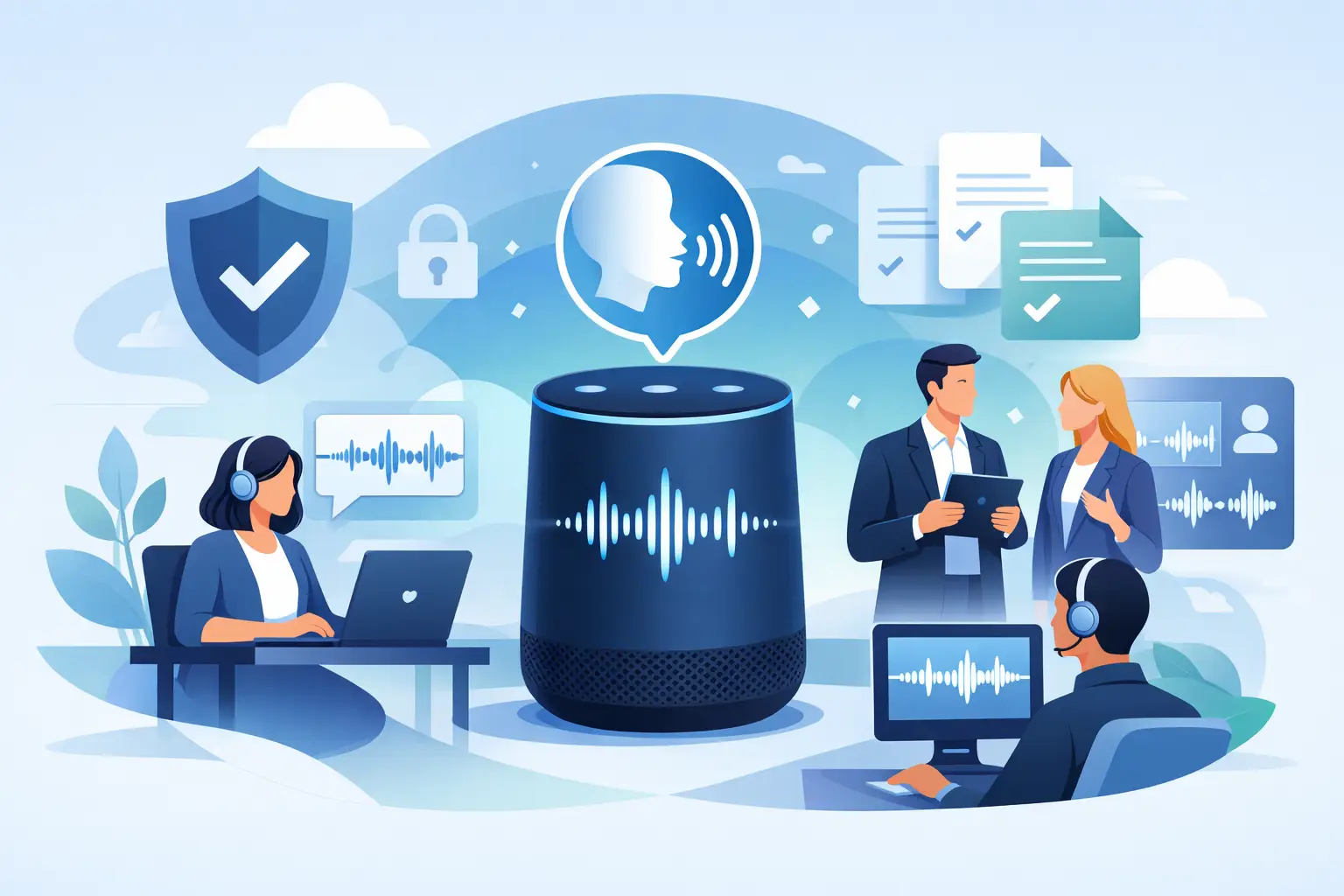
Voice AI compliance is the set of policies, controls, and technical safeguards that make automated conversations lawful, transparent, and operationally safe. That includes how you collect consent, what you disclose to callers, how you store audio and transcripts, where data is processed, and when a human takes over.
Many buyers assume compliance begins and ends with a recording notice. It does not. If your voice agent qualifies leads, verifies identity, answers healthcare questions, or accesses account data, the risk profile changes immediately. The right setup depends on your geography, industry, call flows, and the systems your agent touches.
A support line for order tracking has a different compliance burden than a clinic scheduling agent or a debt collection workflow. That is why broad claims like compliant by default should be treated carefully. Platforms can provide tools, but your business is still responsible for how those tools are configured and used.
A practical guide to voice AI compliance starts with call design
Most compliance failures show up first in conversation design, not infrastructure. If the agent does not clearly identify itself, explain recording, or handle edge cases safely, the problem starts before your legal team reviews a contract.
Begin with the opening script. Callers should understand they are speaking with an automated system, what the system can help with, and whether the call may be recorded or transcribed. Keep that language plain. A vague disclosure may satisfy no one, while a clear one reduces confusion and complaints.
Then look at the tasks the agent performs. The more sensitive the action, the more guardrails you need. Booking a haircut is one thing. Updating a medical appointment, changing a payment method, or discussing account-specific issues is another. In those cases, identity checks, escalation rules, and restricted data access should be designed into the workflow from day one.
Just as important is interruption handling. Human-sounding voice systems create better experiences, but they can also blur expectations. If the assistant sounds highly natural, disclosure becomes more important, not less. Realism improves conversion and customer satisfaction. It also raises the bar for transparency.
Consent, disclosure, and recording rules
If your voice AI records or transcribes calls, consent is not a side note. It is a core control. The exact requirement depends on jurisdiction, but your operating assumption should be simple: tell people clearly what is happening and give them a path forward.
That path may be continuing the call after disclosure, opting out of recording where appropriate, or transferring to a human. What works depends on your business model and legal requirements. For inbound service lines, a concise upfront notice is often the baseline. For outbound campaigns, the standard can be higher and the risk can rise quickly.
Disclosure should also match channel behavior. A phone interaction and a WhatsApp voice interaction may create different user expectations, even when the same AI system powers both. Keep your policies consistent, but do not force one script across every channel if it creates confusion.
Another common mistake is disclosing recording while ignoring automated decision-making. If the agent is qualifying leads, prioritizing callers, or triggering workflow outcomes, document those actions internally and review whether additional disclosure or policy language is needed.
Data handling is where many teams get exposed
Voice AI systems generate more than audio. They create transcripts, metadata, CRM updates, webhook events, summaries, and sometimes model logs. Every one of those outputs can carry sensitive data.
Start by deciding what you actually need to keep. If a transcript only helps during live handling but provides little long-term value, limit retention. If recordings are useful for quality assurance, define how long they remain accessible and who can retrieve them. Retention discipline lowers risk, storage cost, and audit complexity.
Access control matters just as much. Support managers may need recordings for training. Sales teams may only need call outcomes. Engineers may need performance logs without unrestricted access to customer content. The cleaner your role-based access model, the easier it is to prove control.
Data location also matters. If your customers, regulators, or enterprise buyers care where voice data is processed and stored, your architecture needs to support that requirement. This is where infrastructure flexibility becomes commercially valuable. A bring-your-own-cloud or bring-your-own-provider model can help teams meet internal security standards without sacrificing deployment speed.
Vendor selection is a compliance decision
Choosing a voice AI platform is not only a product decision. It is a risk allocation decision. You need to know which party handles telephony, model processing, logging, integrations, storage, and incident response.
Ask direct questions. Where does audio flow? What gets stored by default? Can logging be minimized? How are transcripts protected? Can the platform support regional deployment needs? What happens if a call needs to be transferred to a human agent securely and fast?
The right vendor should make these answers easy to get. If you have to chase basic details across sales, support, and legal, expect friction later. Fast deployment is valuable, but not if your team has to retrofit compliance after launch.
This is also where enterprise and self-serve needs can diverge. Smaller teams may accept standard controls if they can launch in days and reduce call volume immediately. Larger organizations usually need tighter approval workflows, custom retention settings, SLA-backed support, and documented escalation paths. Neither model is wrong. The point is to match controls to exposure.
Build human escalation into the compliance model
A compliant voice AI system does not try to automate everything. It knows when to stop.
That means defining transfer triggers before production. If a caller disputes a charge, expresses distress, asks for legal help, or reaches a verification dead end, the agent should hand off quickly. Compliance is not only about preventing unlawful data use. It is about preventing bad automated outcomes.
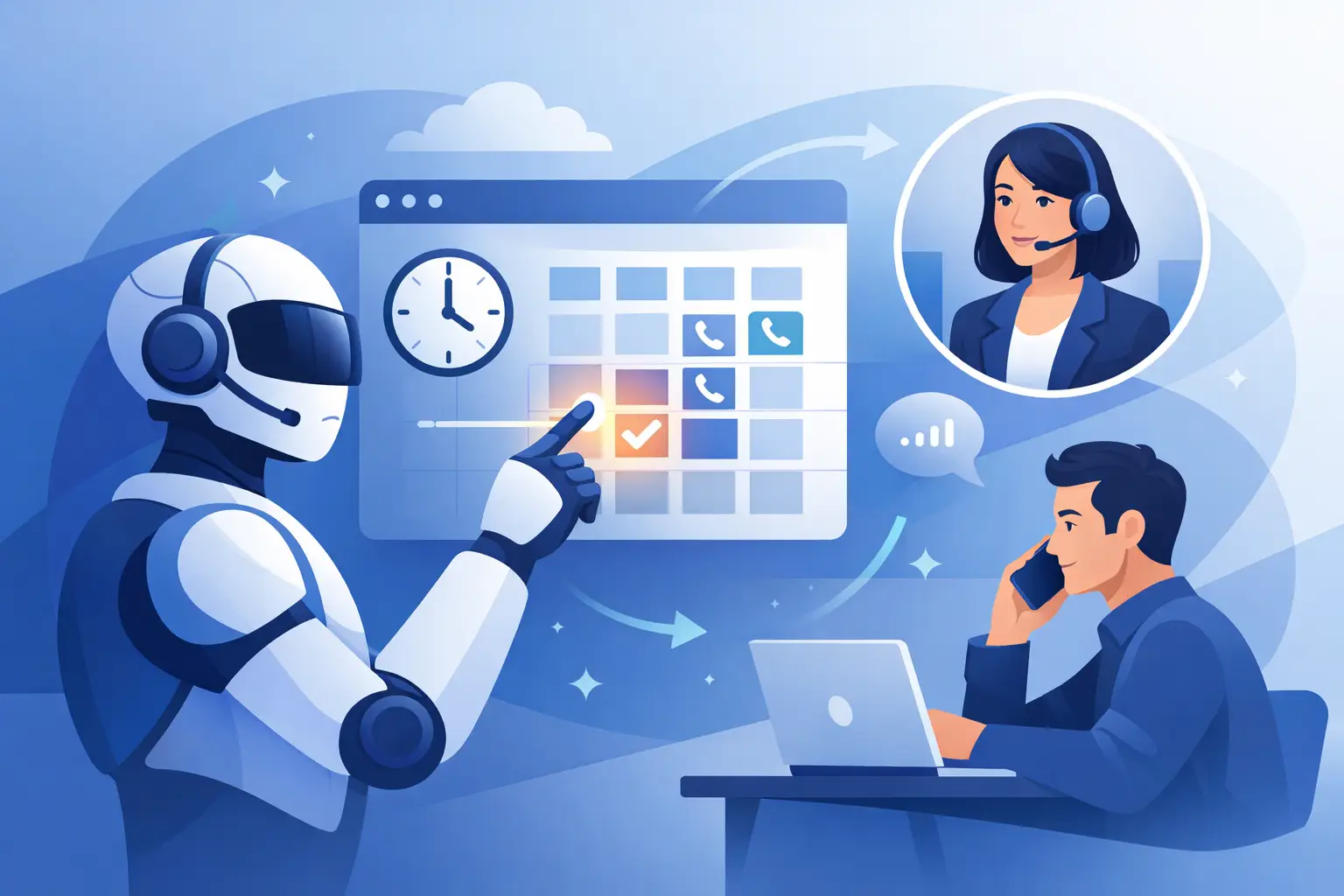
Escalation also protects customer experience. Some conversations should never be forced through automation for efficiency's sake. A good voice AI deployment reduces workload at scale while preserving a clean path to a person when confidence drops or risk increases.
This is one reason interruption-aware, low-latency systems matter. The smoother the conversation, the easier it is to gather intent early and route accurately. But speed should support judgment, not replace it. The best systems combine natural interaction with strict workflow boundaries.
How to operationalize a guide to voice AI compliance
The teams that get this right do not treat compliance as a one-time legal review. They run it like an operating system.
Start with a simple internal map of every voice workflow. Document the use case, the data collected, the systems touched, the disclosure used, the retention period, and the transfer conditions. If you cannot explain a call flow clearly on one page, it is probably too risky to deploy at scale.
Next, test with real scenarios. Run calls that include interruptions, angry customers, identity mismatches, payment questions, and requests to speak with a person. Compliance failures often appear in edge cases the happy path never exposes.
Then assign ownership. Legal may define policy, but operations usually owns execution. Support leaders, product teams, and infrastructure teams should each know what they control. That is especially true if your deployment spans telephony providers, AI models, CRM systems, and custom webhooks.
Finally, review continuously. Regulations evolve. Vendors update models. New use cases creep in. A voice AI system that was acceptable six months ago may need new disclosures, narrower retention, or stronger routing rules today. If you are scaling across markets, periodic review is not overhead. It is part of staying deployable.
For teams moving fast, the goal is not theoretical perfection. It is controlled speed. You want to launch quickly, prove value, and avoid the expensive mistake of rebuilding trust after a preventable compliance miss. Platforms like Kalem can shorten the path with natural voice automation, flexible infrastructure, and human handoff controls, but the real advantage comes from pairing that speed with disciplined operating rules.
The smartest voice AI rollout is not the one with the most features on day one. It is the one that customers trust enough to keep using.