Phone Automation vs Outsourcing for Growth
Compare phone automation vs outsourcing for support and sales. See where AI voice agents cut cost, speed response, and keep human escalation available.
On this page
A missed call is rarely just a missed call. For an e-commerce team, it can be a delivery complaint that turns into a refund. For a clinic, it can be an unfilled appointment slot. For a real estate business, it can be a buyer who calls the next broker within minutes. The phone automation vs outsourcing decision comes down to one operational question: how do you answer every caller quickly without making service quality more expensive?
Outsourced call centers have long been the default answer. They add people without forcing an internal hiring cycle. But they also introduce variable quality, training overhead, handoffs, and cost that rises with every new interaction. AI voice automation changes the economics by handling repeatable conversations instantly, around the clock, while routing exceptions to the right human.
The right choice is not always automation or outsourcing. High-performing teams usually decide by call type, volume pattern, customer risk, and the systems their calls need to access.
Phone Automation vs Outsourcing: The Core Difference
Outsourcing buys human capacity. A business pays a third party to recruit, train, schedule, manage, and quality-check agents who answer calls on its behalf. It is useful when conversations demand judgment, empathy, detailed negotiation, or specialized knowledge that cannot be captured in a workflow.
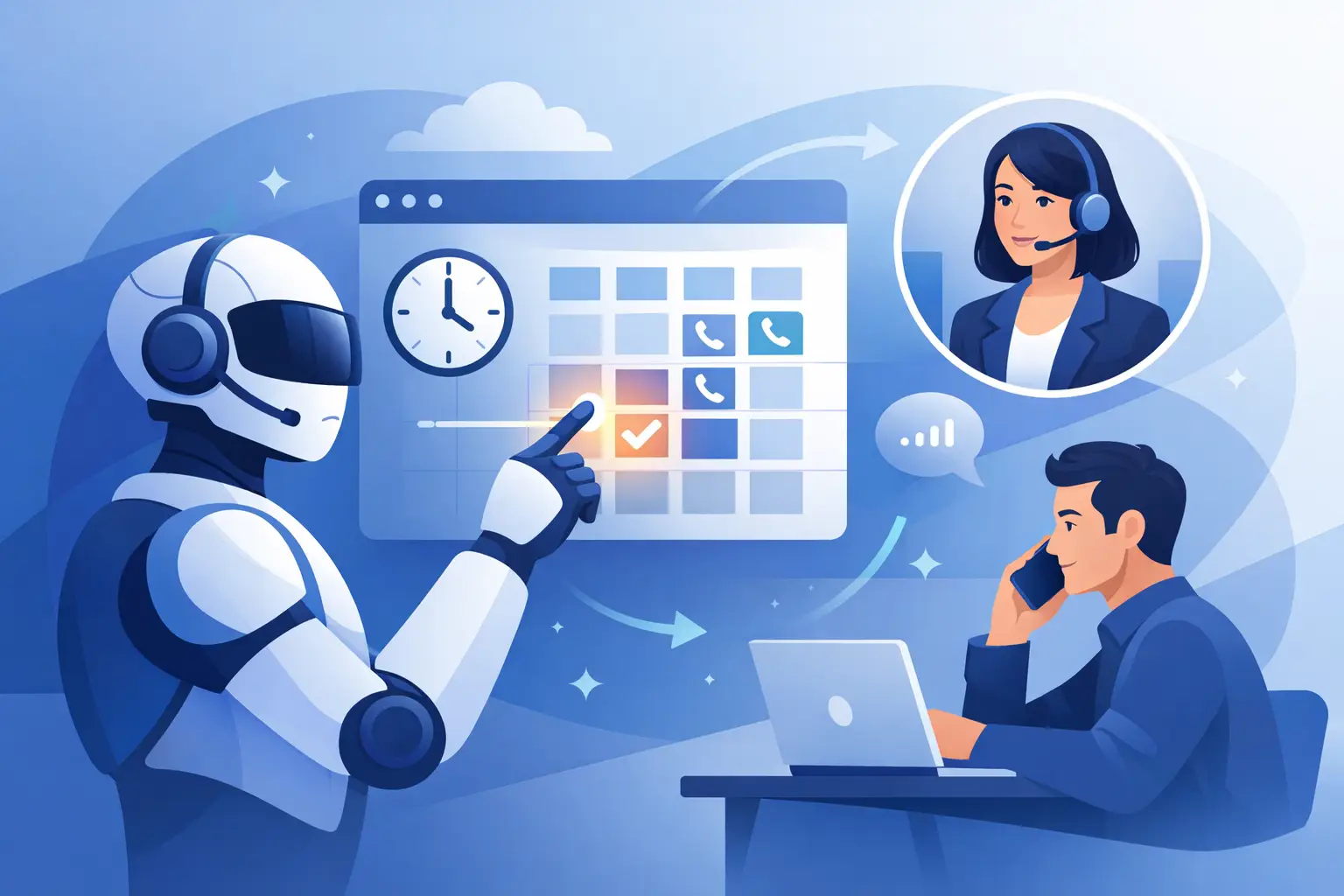
Phone automation uses a voice agent to conduct defined conversations directly. A modern agent can greet callers, understand natural speech, answer questions, collect details, check connected systems, schedule appointments, qualify leads, and transfer calls when a human should take over. It does not wait for a shift to start or a queue to clear.
That difference matters because the underlying cost model is different. Outsourcing generally scales with agent hours, call volume, languages, service-level requirements, and management complexity. Automation scales with usage and infrastructure, but it does not require adding a person for each additional concurrent caller.
Automation is not a replacement for expertise. It is a way to remove routine work from the path of expertise. If 70% of inbound calls concern order status, store hours, appointment changes, lead intake, payment reminders, or basic account questions, paying human agents to repeat the same answers is an expensive operating model.
Where Outsourcing Still Makes Sense
Outsourcing remains a strong option for complex, high-stakes, or highly variable interactions. A patient disputing a medical bill, an enterprise buyer negotiating contract terms, or a customer in a sensitive retention situation may need an experienced person from the first minute.
It can also be practical when a company has no documented call processes. Automation needs clear business rules, approved knowledge, and escalation paths. If every agent handles calls differently and key information lives only in people’s heads, an outsourced team may provide short-term coverage while the company standardizes its workflows.
Language and regional nuance can be another factor. Human teams may be the better fit where a particular dialect, cultural context, or legal requirement demands local expertise. That said, this should be tested against actual call data rather than assumed. Many routine interactions do not require a specialized human response simply because they occur in multiple languages.
The trade-off is control. An outsourced provider can be fast to activate, but its agents need training, scripts, access to business systems, QA reviews, and regular updates. If your pricing, policies, inventory, or scheduling rules change often, keeping every external agent aligned becomes a recurring operations task.
Where Phone Automation Wins
Phone automation performs best when speed, consistency, and availability are more valuable than human improvisation. These are usually high-volume workflows with predictable next steps.
Consider an online retailer receiving hundreds of calls about shipment status. A voice agent can verify the caller, retrieve order information, explain the latest delivery update, create an exception ticket if needed, and escalate damaged-order claims. The customer gets an answer immediately, and human agents spend their time on cases that need investigation.
A healthcare provider can automate appointment confirmation, rescheduling, basic intake, and reminders. A real estate team can answer every property inquiry, capture budget and location preferences, qualify urgency, and book viewings into a calendar. A SaaS company can triage support calls, collect account details, identify the issue category, and route priority customers to the right team.
The operational gains are direct:
- Calls can be answered 24/7, including after-hours peaks and holidays.
- Response time stays consistent even when demand spikes.
- Every conversation follows the latest approved logic and policy.
- Data can move into CRMs, calendars, ticketing systems, and workflows during the call.
- Human teams receive better-qualified transfers instead of raw, repetitive inquiries.
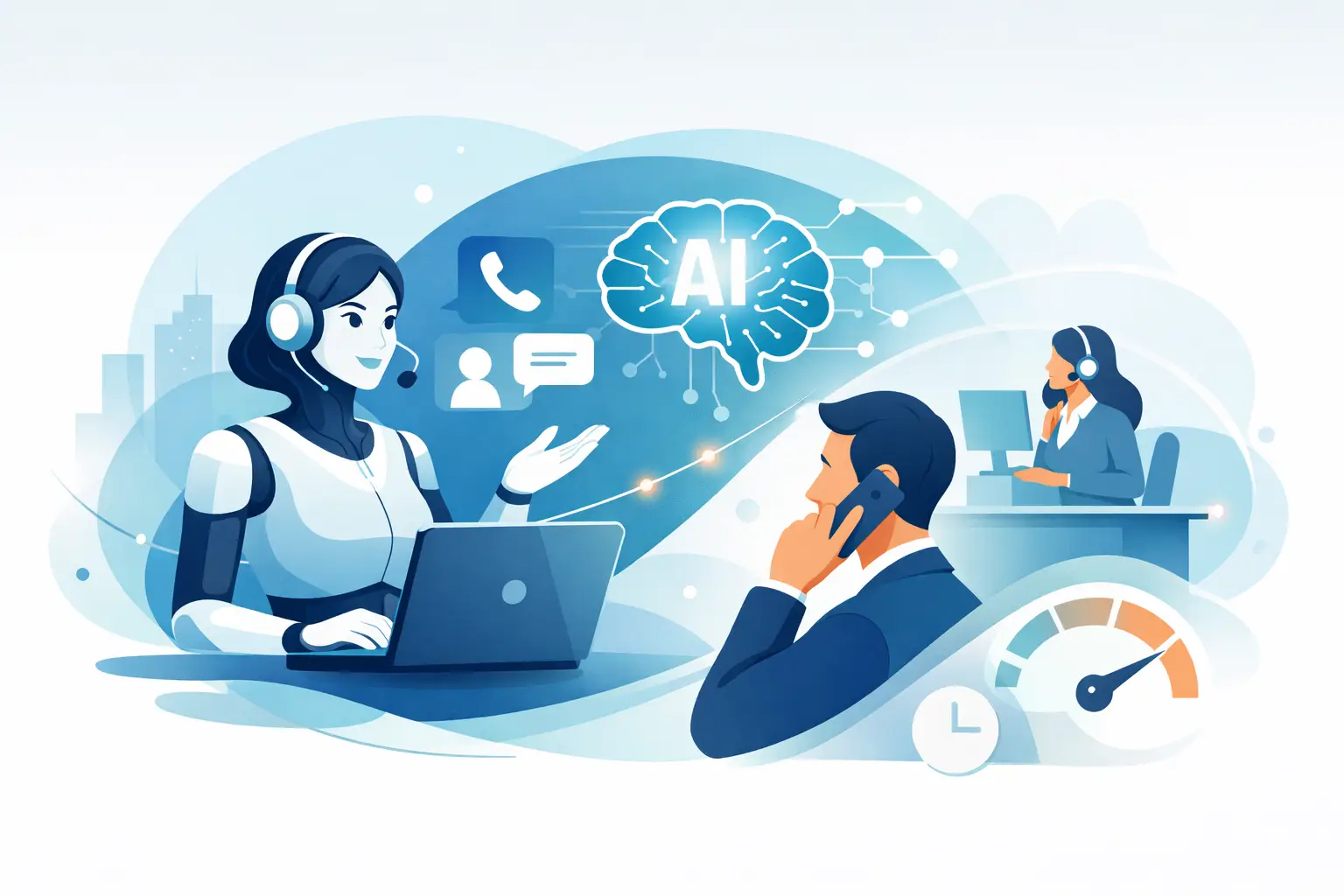
A natural voice experience is essential here. Legacy IVRs force callers through menus and often create more work than they remove. A conversational voice agent should understand interruptions, handle a change in topic, ask concise follow-up questions, and know when to transfer. If callers feel trapped in a script, automation will damage the very experience it is meant to improve.
Compare the Costs Beyond the Per-Call Rate
Many teams compare outsourcing quotes with automation pricing and stop at the headline number. That misses the cost drivers that affect the real outcome.
With outsourcing, calculate agent hours, minimum commitments, onboarding, training refreshes, management time, quality assurance, reporting, peak-time coverage, and the cost of abandoned calls while queues are full. Also account for the internal work required to maintain scripts, review performance, and resolve customer issues caused by incorrect or inconsistent answers.
With automation, assess implementation, telephony, AI usage, integrations, monitoring, knowledge maintenance, and human escalation coverage. A well-designed deployment should have clear ownership for updating policies and reviewing call outcomes. The software may handle the conversation, but the business must still govern the experience.
The biggest financial advantage often comes from capacity, not simply lower per-minute cost. An outsourced team may need more agents to protect service levels during a peak. An AI voice agent can handle many simultaneous calls, then send only the small percentage of exceptions to people. This lets the human team grow more slowly while service availability improves.
Build a Hybrid Model, Not a Hard Divide
For most businesses, the best answer is a hybrid model. Automate the front door and repetitive paths. Keep people available for escalation, sensitive cases, revenue-critical conversations, and situations where policy allows flexibility.
Start by reviewing 30 to 60 days of call recordings and tagging the reasons people call. Look for repeated questions, predictable workflows, average handling time, transfer rates, abandonment, after-hours demand, and the moments when agents need to access another system. This reveals what is genuinely automatable and what only appears repetitive from a dashboard.
Then define an escalation policy before deployment. A caller should reach a human immediately when they request one, when the agent detects frustration, when a request falls outside approved rules, or when the conversation enters a sensitive category. Transfers should include the context already collected so customers do not have to start over.
This is where platforms such as Kalem are designed to fit: a business can deploy human-sounding phone or WhatsApp agents quickly, connect them to existing workflows, and retain smart handoff paths to live teams. The goal is not to hide humans behind AI. It is to make human time available where it creates the most value.
How to Choose the Right Starting Point
Choose outsourcing first if your calls are mostly complex, low-volume, and highly dependent on human judgment. It is also a reasonable temporary option when your processes are still unclear and you need immediate coverage.
Choose phone automation first if your business handles recurring inbound requests, loses calls during busy periods, needs after-hours coverage, or has staff spending large portions of the day on information retrieval and data entry. It is especially effective when your systems already hold the answers: order platforms, calendars, CRMs, support tools, inventory databases, or payment systems.
Do not automate every call at once. Start with one measurable workflow, such as appointment scheduling or order tracking. Set success criteria around answer rate, resolution rate, transfer quality, booking conversion, cost per resolved call, and customer feedback. Improve the conversation using real call data, then expand to the next workflow.
The practical test is simple: if a caller’s request has a known path and a reliable source of truth, automation should handle the first response. If the request requires judgment, exception handling, or a relationship-saving conversation, bring in a person fast. That operating model reduces cost without turning customer service into a dead end.