How Do AI Phone Agents Work in Practice?
How do AI phone agents work? Learn how voice AI handles speech, intent, actions, and transfers to automate calls with speed and realism.
On this page
- How do AI phone agents work at a high level?
- The core components behind an AI phone agent
- What happens during a live call
- Why latency changes everything
- How AI phone agents connect to your business systems
- What AI phone agents are good at, and where they still need humans
- How do AI phone agents work better than legacy IVR?
- What to look for before deploying one
A missed call is rarely just a missed call. It can be a lost booking, a delayed shipment update, a lead that goes cold, or a support queue that keeps growing while your team is already stretched. That is why a lot of operators are asking the same question: how do AI phone agents work, and can they actually handle real business conversations without sounding stiff or failing under pressure?
The short answer is yes, but only when the system is built for live conversation rather than scripted call trees dressed up as AI. A modern AI phone agent is not just speech recognition connected to a chatbot. It is a real-time voice system that listens, understands, responds, takes action, and knows when to hand the call to a human.
How do AI phone agents work at a high level?
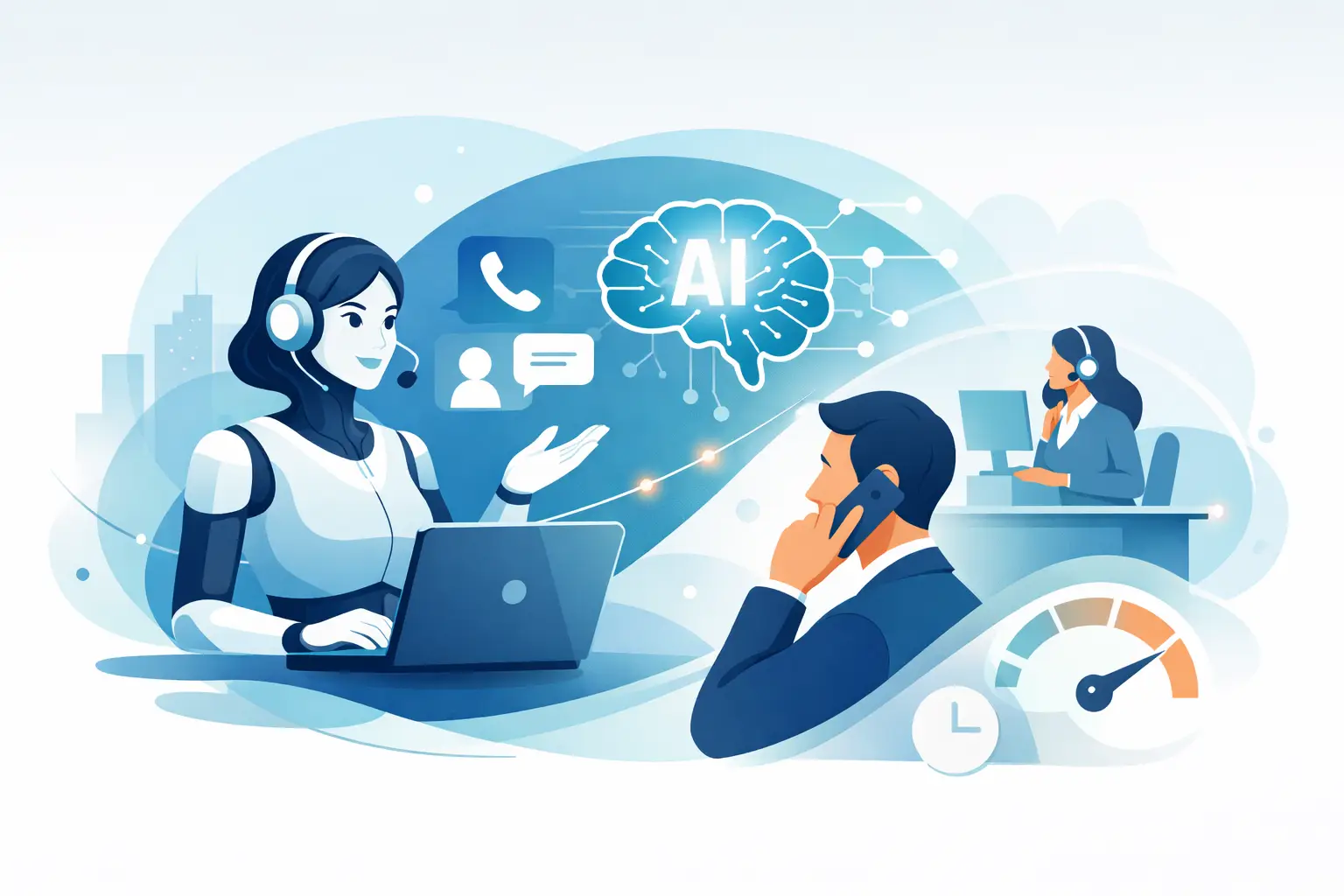
At a business level, an AI phone agent works by turning a live phone call into a structured conversation loop. The caller speaks. The system processes the audio, identifies what the person means, decides what to do next, and generates a spoken response in real time. If needed, it also updates a CRM, checks an order status, books an appointment, or transfers the call.
What matters is speed. If the pause between the caller speaking and the agent replying is too long, the interaction feels broken. If the response sounds overly scripted, customers lose trust fast. Good voice automation depends on low latency, interruption handling, and enough context to keep the conversation natural.
That is the difference between old IVR logic and current-generation AI phone agents. IVR forces callers into a menu. AI phone agents can manage open-ended requests like, "I need to reschedule my appointment for Thursday," or, "Where is my order and can you change the delivery address?"
The core components behind an AI phone agent
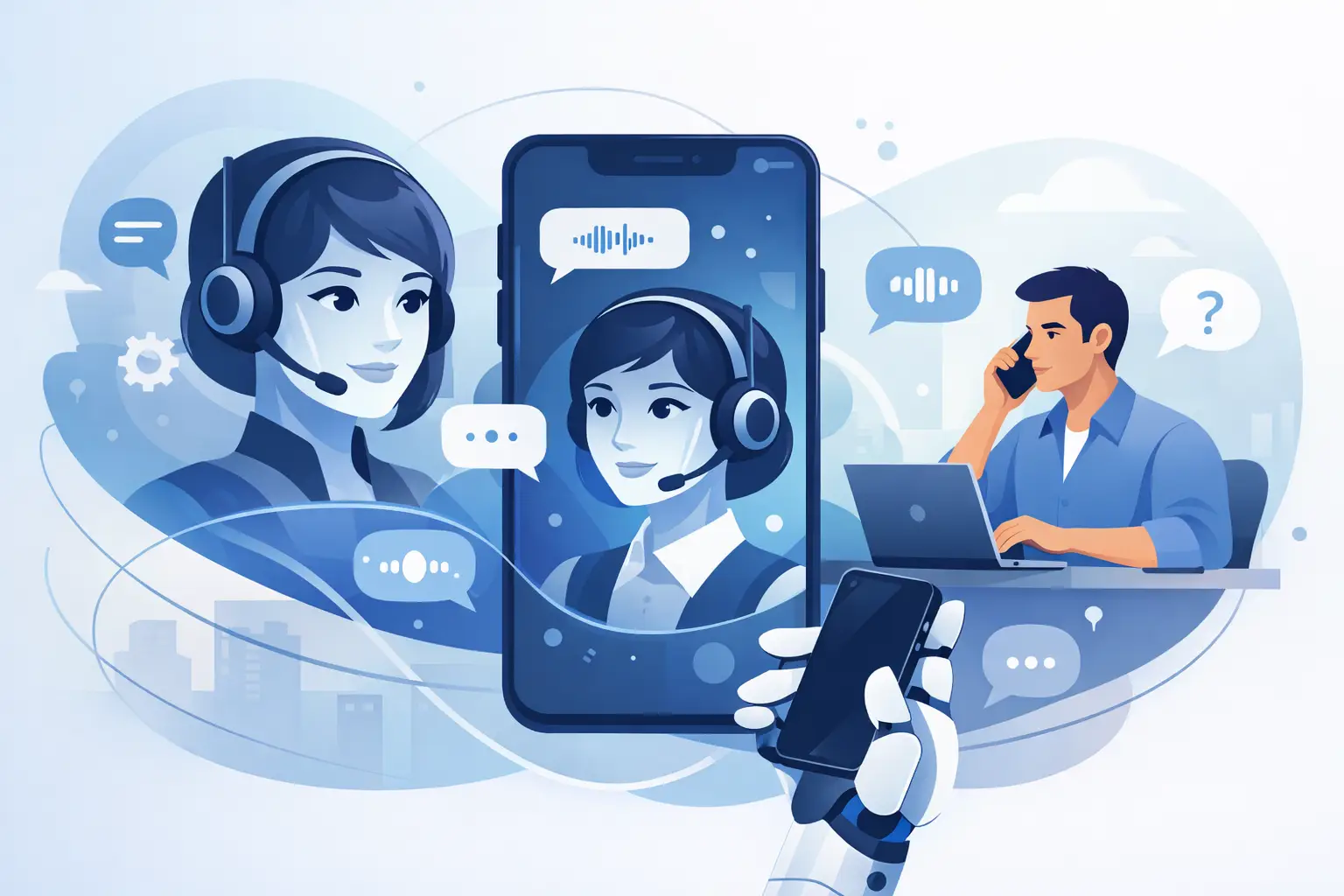
Under the hood, several systems work together at once. The phone layer connects the call through a telephony provider or SIP setup. The speech layer handles live audio input and output. The language layer interprets meaning and plans a response. The action layer connects to business systems so the call can actually get something done.
Speech recognition is the first piece. It converts the caller's voice into text or meaning signals the AI can process. The better the model, the better it handles accents, background noise, fast speech, and incomplete sentences. In live customer calls, that matters more than most teams expect.
Next comes natural language understanding and reasoning. This is where the system determines intent. Is the caller trying to book, cancel, qualify, complain, verify, or escalate? It also has to track context across the conversation. If the caller says, "Actually, make that Friday afternoon," the agent needs to know what "that" refers to.
Then the system generates a response. In older systems, that often meant selecting from canned replies. In stronger setups, it means producing a context-aware answer based on company rules, business data, and the current stage of the call.
Finally, text-to-speech or direct speech generation turns the response into audio. This is where realism becomes visible to the customer. Voice quality, timing, and conversational pacing shape whether the experience feels capable or robotic.
What happens during a live call
A live AI call is a chain of fast decisions, not a single model output. The caller says something. The system detects speech, processes the audio, and starts building understanding before the person has even finished the sentence. That early processing is what keeps the interaction moving.
If the caller interrupts, the system should stop speaking and adapt. If the person changes topic mid-call, it should follow the shift without losing the thread. If the request requires an action, the AI has to call the right tool or workflow, wait for the result, and respond clearly.
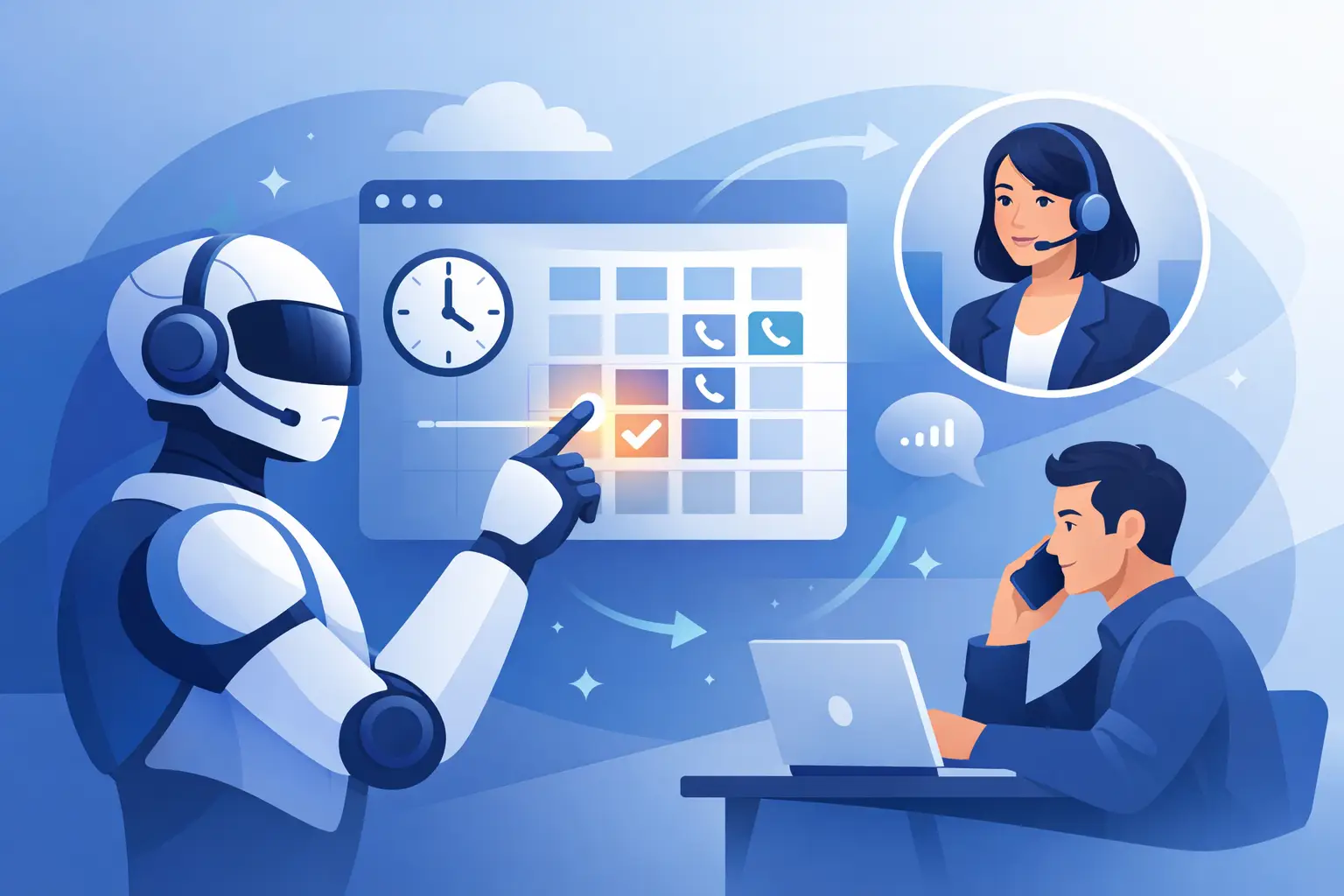
Take a simple healthcare example. A patient calls and says they need to move tomorrow's appointment because they have a meeting. The AI verifies identity, checks calendar availability, offers open slots, confirms the new time, updates the scheduling system, and sends a confirmation. If insurance eligibility or a clinical exception is involved, it transfers to staff.
That is why the best systems are not just conversational. They are operational. Conversation without execution only pushes work downstream.
Why latency changes everything
One of the biggest reasons some voice bots fail is delay. People are highly sensitive to response timing on the phone. A one-second pause can feel awkward. Longer pauses make the caller think the system is confused, disconnected, or simply not listening.
That is why real-time architecture matters. Systems built for ultra-low latency can respond in a way that feels closer to human turn-taking. They can also handle barge-in, which means the caller can interrupt naturally instead of waiting for a long prompt to finish.
For high-volume support and sales environments, this has direct commercial impact. Faster interactions reduce average handle time, improve containment rates, and make callers more willing to complete the conversation. A human-sounding voice is valuable, but responsiveness is what makes that voice credible.
How AI phone agents connect to your business systems
This is where voice AI either becomes useful or stays a demo. An AI phone agent needs access to the tools your team already relies on. That can include CRM records, calendars, ticketing systems, order databases, payment status, shipping tools, webhooks, and internal workflows.
If a caller asks about an order, the agent should fetch the actual status, not give a generic apology. If a lead calls after submitting a form, the AI should know which campaign they came from and qualify them accordingly. If a support issue needs escalation, the handoff should include the transcript, the caller's details, and the reason for transfer.
This is also where implementation flexibility matters. Some companies want a no-code deployment that works fast. Others need API control, custom telephony, regional routing, or bring-your-own-credentials infrastructure. The right setup depends on your stack, compliance needs, and how much control your team wants over the voice layer.
What AI phone agents are good at, and where they still need humans
AI phone agents perform best in repeatable, high-volume workflows with clear business logic. Appointment scheduling, lead qualification, FAQ handling, order tracking, intake, routing, and basic account support are strong fits. These are the interactions that consume team capacity but do not always require human judgment.
The trade-off is that not every call should be automated. Highly emotional complaints, sensitive medical cases, complex billing disputes, and strategic sales conversations often need a person. The goal is not to force automation everywhere. The goal is to automate the right 60 to 90 percent, then escalate the rest cleanly.
That escalation path is critical. A bad transfer creates more friction than no automation at all. A good AI phone agent knows when confidence is low, when policy rules require a human, or when the caller is signaling frustration. It exits fast and passes context forward.
How do AI phone agents work better than legacy IVR?
The biggest difference is flexibility. Legacy IVR systems depend on predefined branches. If the caller says something outside the menu, the experience breaks down quickly. AI phone agents can handle natural language, mixed intents, and follow-up questions without trapping people in a rigid path.
They also reduce operational drag. Traditional phone support often requires more headcount to maintain service levels during peak hours, nights, weekends, or seasonal spikes. AI phone agents can absorb demand instantly, stay available 24/7, and keep service levels stable without constantly increasing staffing costs.
That said, AI is not a replacement for good process design. If your knowledge base is messy, your scheduling rules are inconsistent, or your CRM data is incomplete, the phone agent will expose those weaknesses. Voice AI scales your operation, but it also makes operational quality more visible.
What to look for before deploying one
If you are evaluating a platform, look beyond the demo voice. Ask how it handles interruptions, latency, transfer logic, fallback behavior, and system integrations. Ask whether it supports direct speech-to-speech interaction, whether you can connect your own telephony and AI credentials, and how fast your team can actually launch a production workflow.
You should also look at business metrics, not just model claims. Measure containment rate, average call duration, transfer rate, resolution quality, booking conversion, and cost per handled interaction. A voice agent that sounds impressive but fails to complete tasks will not hold up in a real operation.
Platforms like Kalem are built around that reality. The value is not just that the voice sounds natural. It is that businesses can deploy quickly, connect live workflows, keep latency low, and automate customer-facing calls without sacrificing the option to escalate to a human.
The real question is not whether AI can answer the phone. It is whether your phone operation is still doing work that should have been automated months ago. The teams moving fastest are not waiting for perfect. They are starting with one call flow, proving the numbers, and scaling from there.