Can AI Book Appointments Automatically?
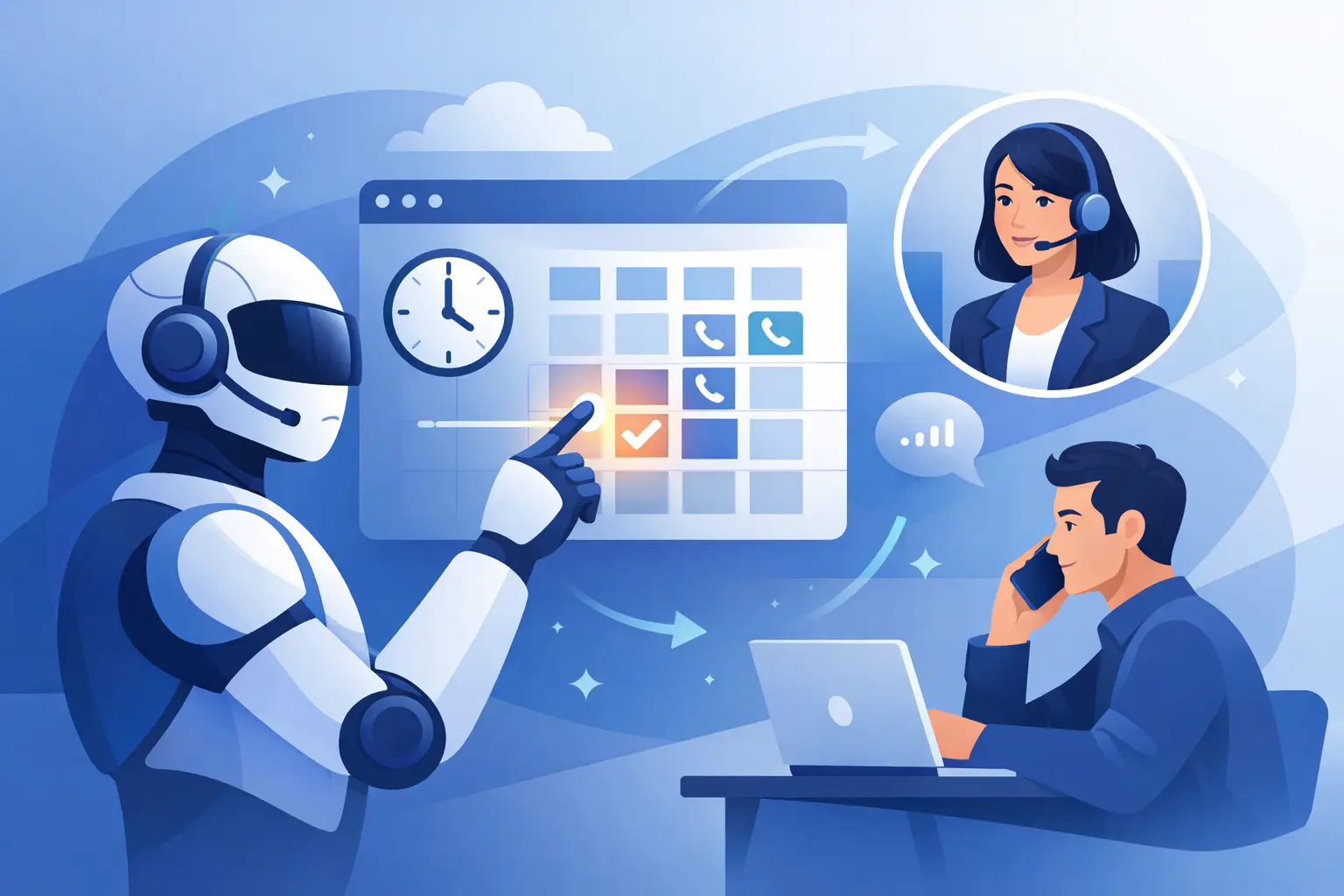
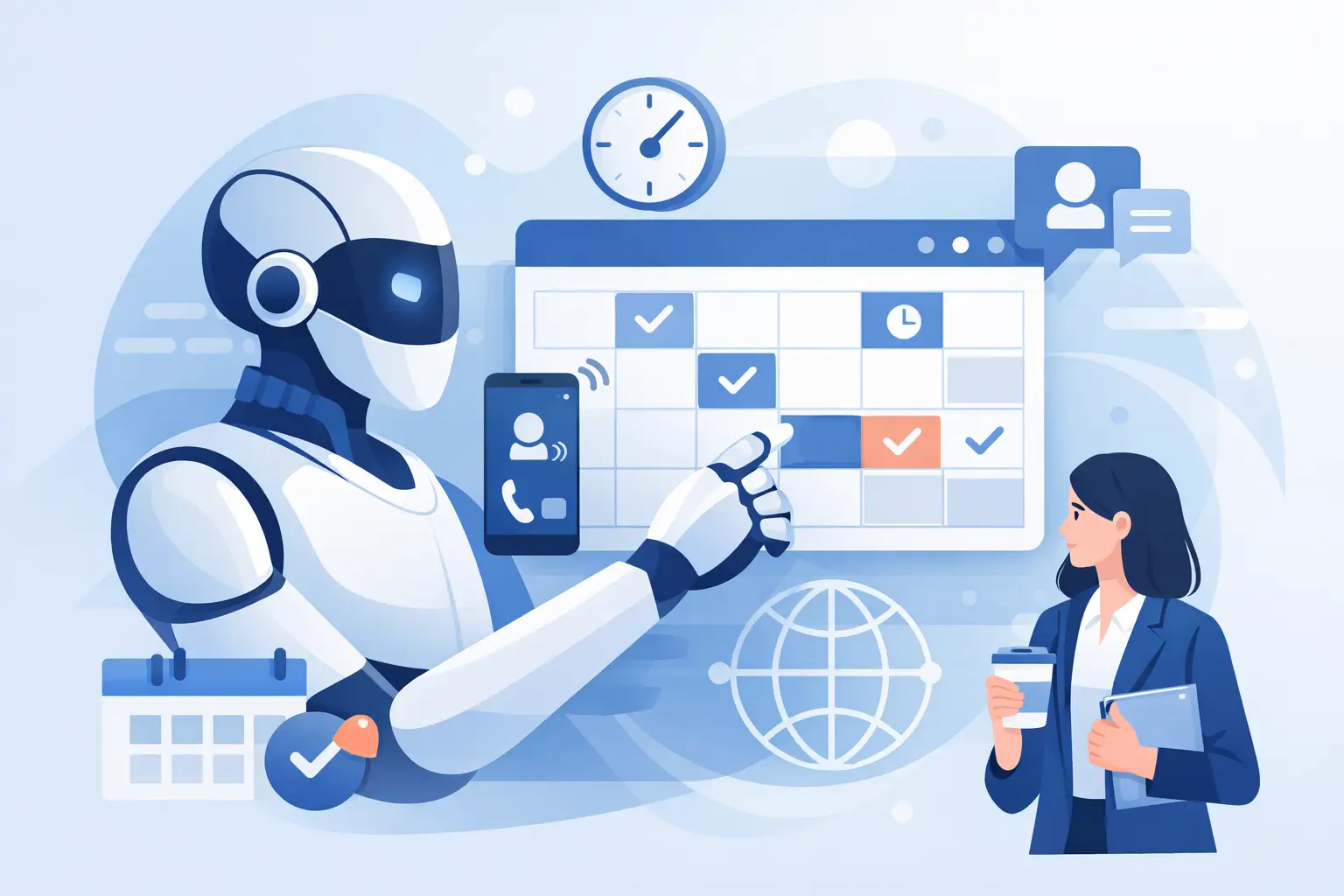
Can AI book appointments automatically? Yes - with the right voice workflows, integrations, and guardrails, businesses can schedule at scale.
On this page
Missed calls cost more than one appointment. They create dead time for staff, slow down response times, and send high-intent customers to the next provider who picks up faster. That is why so many operators are asking the same question: can AI book appointments automatically? The short answer is yes. The useful answer is yes, if the system can actually hold a natural conversation, check real availability, confirm details, and hand off edge cases without creating friction.
For most businesses, appointment booking is not a hard logic problem. It is an operations problem. Calls come in at uneven times. Front-desk teams get interrupted. Peak hours create bottlenecks. Customers call after hours and still expect an answer. AI can solve a large part of that workload, but only when it is connected to the systems where booking actually happens and designed for real conversations, not canned scripts.
Can AI book appointments automatically in real workflows?
Yes, and it already does in healthcare clinics, real estate teams, service businesses, salons, auto shops, and support-heavy sales environments. But there is a difference between an AI that can collect a preferred time and one that can complete the full booking workflow end to end.
A useful appointment AI needs to do five things well. It has to answer instantly, understand what the caller wants, access calendar availability, place the appointment into the right system, and send the customer away with confidence that the booking is real. If any one of those breaks, the experience starts to feel unreliable.
That is why simple chat widgets and old IVR trees often fail this use case. They can capture intent, but they struggle when customers interrupt, change dates mid-conversation, ask follow-up questions, or speak in a less structured way. A phone booking flow needs conversational flexibility. People do not say, "I would like appointment category A at time slot B." They say, "Do you have anything Thursday afternoon, preferably after 3, and can I see the same person as last time?"
If the AI can process that naturally and act on it in real time, automation becomes viable. If it cannot, staff still end up cleaning up the mess.
What has to be true for automatic booking to work
The first requirement is live system access. AI cannot reliably book appointments automatically if it is working from static rules or yesterday's availability. It needs real-time integration with calendars, scheduling software, CRM records, and sometimes custom workflows through APIs or webhooks.
The second requirement is conversation quality. This matters more than many teams expect. Booking sounds transactional, but it often includes ambiguity. Patients ask about provider preferences. Customers compare time slots. Prospects want to know whether an initial consultation is free. If the AI sounds robotic or loses context, callers stop trusting it fast.
The third requirement is clear business logic. Not every appointment should be booked the same way. Some businesses need buffers between meetings. Some need qualification before scheduling. Others need location-based routing, deposit collection, or rules around appointment type and staff availability. Good automation is not just speech recognition plus calendar access. It is business logic applied in real time.
The fourth requirement is fallback handling. There will always be exceptions. A VIP client wants a special accommodation. A patient asks a compliance-sensitive question. A prospect needs a complex product discussion before committing to a meeting. In these cases, the AI should not force the workflow. It should transfer the call, create a callback task, or escalate cleanly.
Where businesses get the biggest return
The best appointment automation use cases usually share one trait: repeatable inbound demand. If your team answers the same scheduling questions dozens or hundreds of times per week, AI can remove a large amount of manual work without reducing service quality.
Healthcare is an obvious example, especially for routine appointment requests, reschedules, and confirmations. Real estate teams benefit when leads call after seeing a listing and want a viewing quickly. Home service companies gain from booking inspections and technician visits without forcing customers to wait on hold. Sales teams use it to qualify inbound interest and place meetings directly on calendars while intent is still high.
The return is not only labor savings. Speed matters. A caller who gets an answer in seconds is more likely to book than someone who reaches voicemail. That can mean more filled slots, fewer abandoned opportunities, and better calendar utilization across teams.
There is also a customer experience advantage. When AI works well, it reduces the annoying parts of booking. No hold music. No callback ping-pong. No need to repeat basic details three times. The interaction feels faster because it is faster.
Where the trade-offs show up
Not every booking process should be fully automated. Some should be partially automated, with AI handling intake and availability while a human confirms the final step. That is especially true in high-complexity industries where compliance, pricing nuance, or consultative selling affects the appointment itself.
There is also a design choice between speed and control. A very strict workflow can reduce errors but feel rigid. A more conversational workflow feels natural but needs stronger backend controls and guardrails. The right balance depends on call volume, risk level, and the value of each appointment.
Accent variation, multilingual demand, noisy environments, and industry jargon also affect performance. Businesses serving broad geographies or mixed-language audiences should test heavily before rolling automation out at scale. The question is not whether AI can book appointments automatically in theory. The question is whether it can do it accurately enough for your actual callers.
How to evaluate an AI booking setup
Start with the workflow, not the model. Map what happens from the first hello to the final confirmation. What information is required? Which fields are optional? What disqualifies a booking? When should the call transfer to a human? If you cannot answer those questions clearly, automation will expose the gaps.
Then look at the conversation layer. Can the AI handle interruptions? Can it clarify uncertain dates and times? Can it respond in a way that sounds natural rather than stitched together? Low latency matters here because delays make callers talk over the system or assume it is broken.
Next, check integration depth. Can the AI read and write to your scheduling system? Can it update CRM records? Can it trigger reminders, WhatsApp confirmations, or internal notifications? A booking system that stops at conversation is only doing half the job.
Finally, review controls. You want logging, prompt and workflow configurability, business-hour rules, transfer logic, and clear reporting on outcomes. Teams need to see booked appointments, failed attempts, escalation reasons, and conversion performance by channel or workflow.
This is where a platform approach tends to outperform isolated bots. If the voice layer, workflow engine, and integrations are built to work together, deployment gets faster and operations stay cleaner. That is a major reason businesses move toward infrastructure built for voice automation rather than generic chat-first tools.
What good automation sounds like
A strong AI appointment experience does not try to sound clever. It sounds competent. It answers quickly, speaks clearly, confirms details without overexplaining, and keeps the call moving. If the customer says, "Actually, next week is better," it adjusts. If the customer asks for a human, it transfers without friction.
That naturalness is not cosmetic. It affects conversion. People are more willing to complete a booking when the interaction feels predictable and easy. In practice, that means speech-to-speech systems with low latency, interruption handling, and real workflow awareness have a clear advantage over slow, turn-based bots.
For businesses evaluating vendors, this is the line to watch. Do you want a demo that can book a slot in a controlled scenario, or a production system that can handle live customer behavior at scale? Those are very different products.
Kalem fits this category well because it combines natural voice interactions with real integrations, transfer logic, and deployment speed. For teams trying to replace missed calls and manual scheduling overhead fast, that combination matters.
So, can AI book appointments automatically?
Yes, and for many businesses it should. But the winning setup is not just an AI voice on top of a calendar. It is a connected workflow that understands real speech, follows your booking rules, updates your systems, and knows when to bring in a human.
That is the standard to use when evaluating any solution. If the AI can reduce response time, increase booking completion, and remove manual scheduling work without making the customer work harder, it is not a novelty. It is operations infrastructure.
The smartest next step is not asking whether automation is possible. It is identifying which appointment flows are repetitive enough, valuable enough, and structured enough to automate first.