AI Receptionist vs IVR: What Actually Wins?
Compare ai receptionist vs ivr for speed, cost, and customer experience. See which system handles calls better as volumes and expectations rise.
On this page
- AI receptionist vs IVR: the core difference
- Where IVR still works
- Why AI receptionists are replacing IVR in high-volume teams
- Customer experience: menu navigation vs real conversation
- Cost: cheaper upfront vs cheaper at scale
- AI receptionist vs IVR for sales and support workflows
- Implementation: simple menus vs connected workflows
- Which businesses should choose which option?
- The real decision is not old tech vs new tech
If your phone system still opens with "Press 1 for sales, press 2 for support," you already know the problem. The real question in ai receptionist vs ivr is not which one answers calls - both do. It is which one actually moves customers forward without creating friction, missed revenue, or unnecessary workload for your team.
For most businesses, IVR was the default because it was predictable, cheap to set up, and widely available. But caller behavior changed faster than phone systems did. People do not want to memorize menu trees, wait through prompts, or restart when they choose the wrong option. They want to say what they need and get help immediately.
That is where the gap between traditional IVR and an AI receptionist becomes very clear.
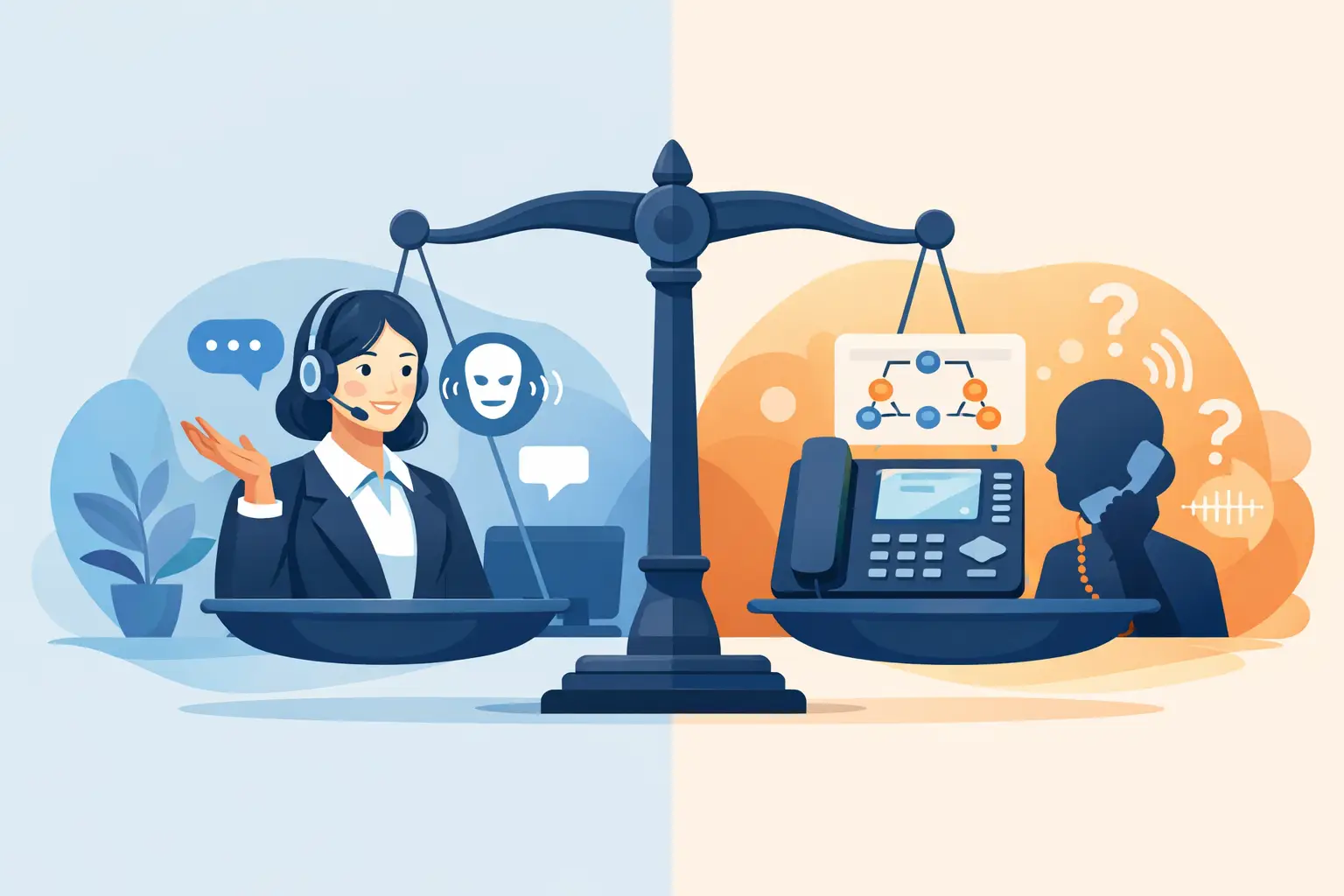
AI receptionist vs IVR: the core difference
An IVR, or interactive voice response system, routes callers through keypad selections or simple voice commands. It is structured, scripted, and limited by the menu logic you configure. It works best when the range of possible requests is narrow and callers fit neatly into predefined paths.
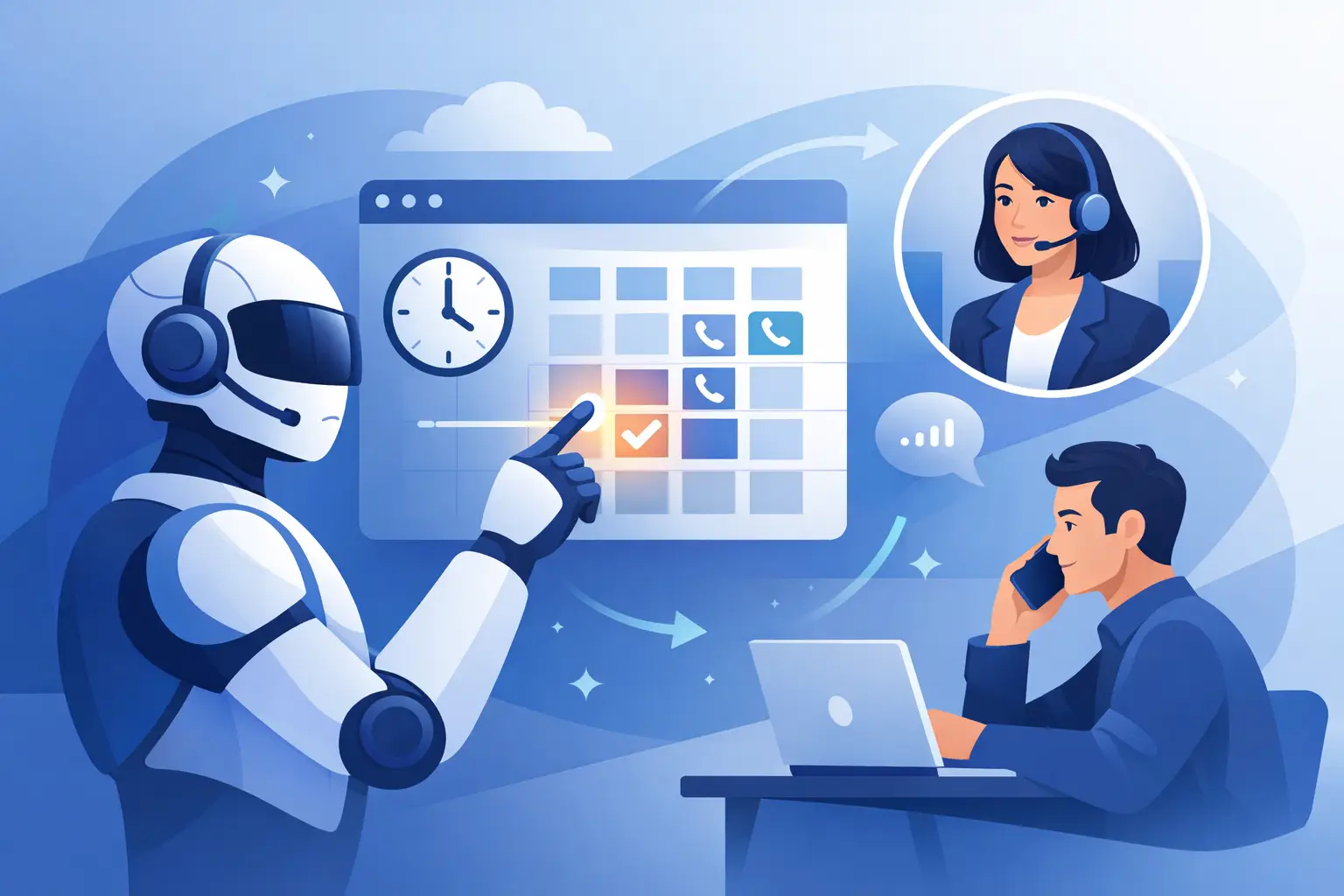
An AI receptionist handles calls more like a trained front-desk operator. Instead of forcing the caller into a menu, it listens, understands intent, asks follow-up questions, and completes tasks in real time. That can mean booking appointments, answering common service questions, qualifying leads, checking order status, or transferring the call with context.
This is not just a UI difference. It changes how your business handles volume, complexity, and customer expectations.
Where IVR still works
IVR is not obsolete. In the right environment, it still does the job.
If your call flow is extremely simple, IVR can be cost-effective. A small office that needs after-hours routing, a utility line with a few fixed options, or a compliance-heavy workflow with tightly controlled paths may not need conversational AI on day one. If callers mainly need to reach a department and little else, a basic menu may be enough.
IVR can also be easier to approve internally because teams understand it. There is less perceived risk in choosing an older system with obvious guardrails, even if the customer experience is weaker.
But that stability comes with trade-offs. The moment requests become less predictable, IVR starts showing its limits.
Why AI receptionists are replacing IVR in high-volume teams
The biggest weakness of IVR is that it expects the caller to adapt to the system. An AI receptionist does the opposite. It adapts to the caller.
That matters when your business handles varied inbound requests. Think about an e-commerce brand fielding delivery questions, return requests, and payment issues. Or a clinic managing appointment scheduling, cancellations, insurance questions, and urgent escalation. Or a real estate team qualifying leads while routing existing tenants and owners differently. These are not one-button interactions.
An AI receptionist can understand natural speech, manage interruptions, and respond in a way that feels much closer to talking with staff. That reduces abandonment and shortens the path from inbound call to resolution.
Operationally, this matters for three reasons. First, it improves containment without trapping customers. Second, it gives live agents fewer repetitive calls. Third, it keeps service levels stable when call volume spikes.
Customer experience: menu navigation vs real conversation
Most IVR frustration comes from effort. Callers have to listen, decide, select, wait, and often repeat themselves when they finally reach a person. Every extra step increases drop-off.
An AI receptionist removes much of that effort. A caller can say, "I need to reschedule my appointment for Thursday," or "Where is my order?" and get an immediate response. If escalation is needed, the system can pass the interaction to a human with relevant context instead of forcing the customer to start over.
That difference is easy to underestimate from the inside. Businesses often judge phone systems by whether calls are answered. Customers judge them by whether their issue gets handled quickly.
If your brand depends on responsiveness, an outdated phone experience does more damage than most teams realize. It affects conversion, retention, and trust.
Cost: cheaper upfront vs cheaper at scale
On paper, IVR often looks less expensive. Setup is straightforward, pricing is familiar, and there is little expectation of intelligence beyond routing.
But that is only the upfront view. The more useful comparison is total operational cost.
A low-cost IVR can still create expensive outcomes: abandoned leads, overloaded support teams, longer handle times, and missed after-hours opportunities. If callers cannot self-serve effectively, your labor costs stay high. If routing is clumsy, your team spends more time correcting handoffs. If simple questions still require humans, scale remains expensive.
An AI receptionist usually has a higher capability ceiling and better economics over time, especially for businesses with recurring call patterns. When it can resolve common requests automatically, qualify inbound leads, and route only the right calls to staff, the labor savings become material.
That is why the decision should not be framed as software cost alone. It should be framed as cost per resolved interaction.
AI receptionist vs IVR for sales and support workflows
For sales teams, IVR is often too passive. It can send a caller to a department, but it cannot meaningfully qualify interest, collect intent, or guide the conversation. An AI receptionist can ask the right questions, capture lead details, and prioritize high-intent opportunities before a rep gets involved.
For support teams, the same principle applies. IVR can route. AI can resolve.
That does not mean AI should handle every call end to end. In many businesses, the best setup is hybrid. Let the AI receptionist manage repetitive and structured requests, then transfer edge cases or sensitive interactions to a person. The handoff matters as much as the automation. If transfer happens with context, agents work faster and customers stay calmer.
This is where modern voice systems have an edge over older automation. The goal is not to block human support. The goal is to use human time where it creates the most value.
Implementation: simple menus vs connected workflows
IVR is simpler because it does less. You define options, assign destinations, record prompts, and go live.
An AI receptionist requires more thought, but the payoff is much larger. You need to define use cases, escalation logic, integrations, and the data the system should access. Once connected to calendars, CRMs, ticketing tools, or back-office workflows, it stops being just a phone layer and starts becoming an operating layer.
This is also where many buyers make the wrong comparison. They compare IVR to AI as if both are just call-routing tools. They are not. A modern AI receptionist can take action, not just direct traffic.
That said, implementation quality matters. A poorly configured AI system can still produce awkward experiences. Latency, weak prompts, bad escalation design, and disconnected data sources will all hurt performance. Businesses should look for fast response times, natural speech handling, strong workflow integration, and clear human fallback paths.
Which businesses should choose which option?
If your call volume is low, your needs are basic, and callers only need department routing, IVR may still be enough for now. It is functional, familiar, and likely cheaper in the short term.
If your business depends on inbound responsiveness, has repetitive service workflows, or loses time and revenue to manual call handling, an AI receptionist is the stronger system. That is especially true in healthcare, e-commerce, real estate, SaaS, and service businesses where callers expect immediate answers and where volume fluctuates.
The tipping point usually comes when leadership realizes the phone line is not just an answering tool. It is part of revenue operations and customer experience.
For teams making that shift, platforms like Kalem are built around speed, realistic conversation, and operational control - not just automation for its own sake. That distinction matters when you need results quickly and cannot afford a voice system that sounds like a dead end.
The real decision is not old tech vs new tech
The real decision is whether your phone channel should route people or actually help them.
IVR still has a place in narrow, low-complexity environments. But if your business is growing, handling mixed call intents, or trying to reduce support costs without hurting customer experience, the ceiling is much higher with an AI receptionist.
The best systems now sound natural, respond fast, integrate with your stack, and know when to bring in a human. That changes the phone line from a bottleneck into a working part of your operation.
If callers are still getting stuck in menus, they are telling you something. The next upgrade should not just answer the phone faster. It should make every call easier to finish.