Speech to Speech AI vs Chatbots
Speech to speech AI vs chatbots: learn which fits support, sales, and service workflows, and where voice automation delivers faster ROI.
On this page
- What speech to speech AI vs chatbots really means
- Where chatbots still make sense
- Where speech-to-speech AI pulls ahead
- The customer experience gap is bigger than most teams expect
- Cost, staffing, and ROI
- Implementation trade-offs to think about
- Speech to speech AI vs chatbots by use case
- What buyers should do next
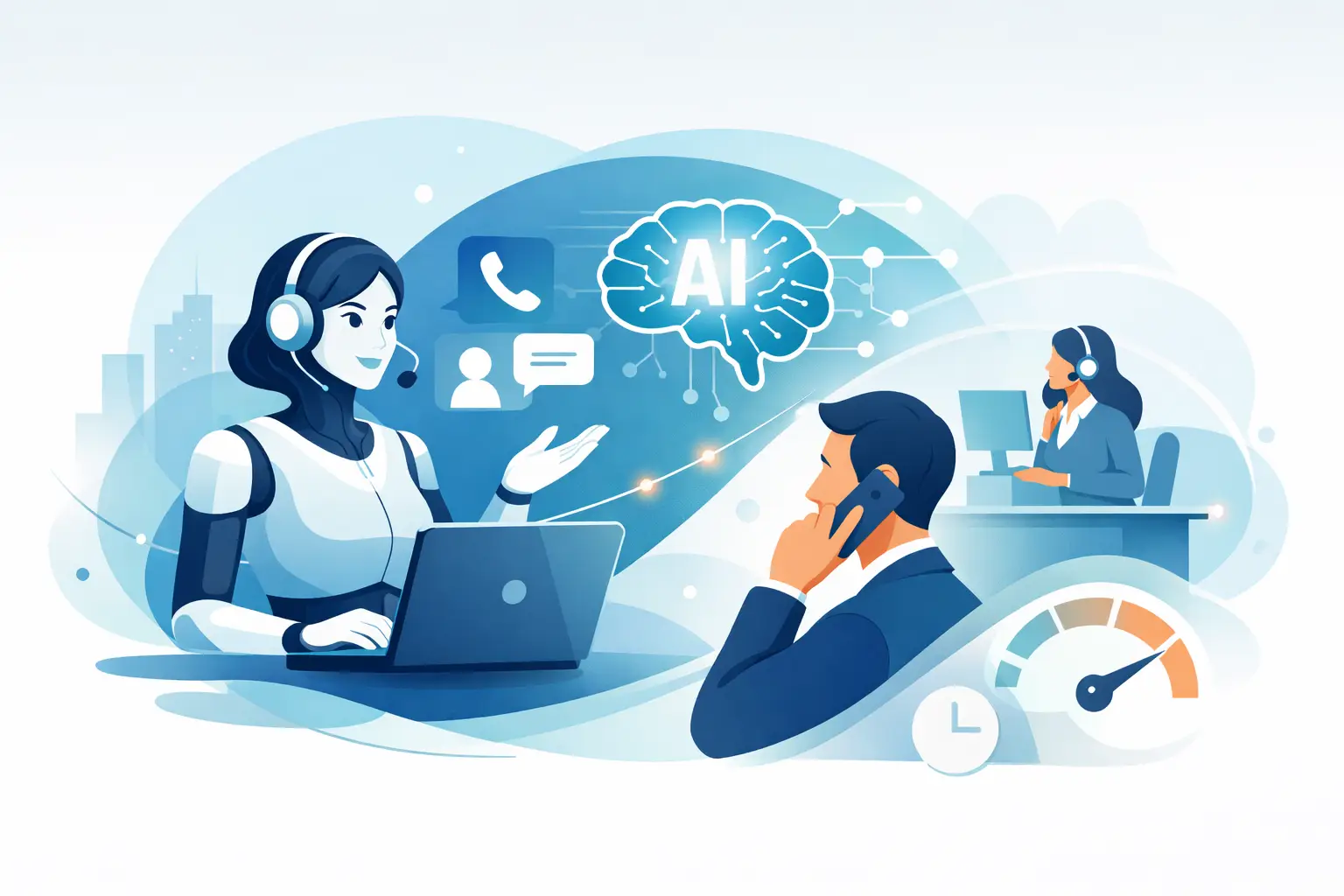
A customer calls to reschedule an appointment, asks a follow-up question, changes their mind mid-sentence, and expects an answer right away. That moment is where speech to speech AI vs chatbots stops being a technical comparison and becomes an operations decision. If your business handles real-time service requests, inbound sales calls, or high-volume support, the gap between these two tools is not small. It affects speed, conversion, staffing costs, and customer experience.
What speech to speech AI vs chatbots really means
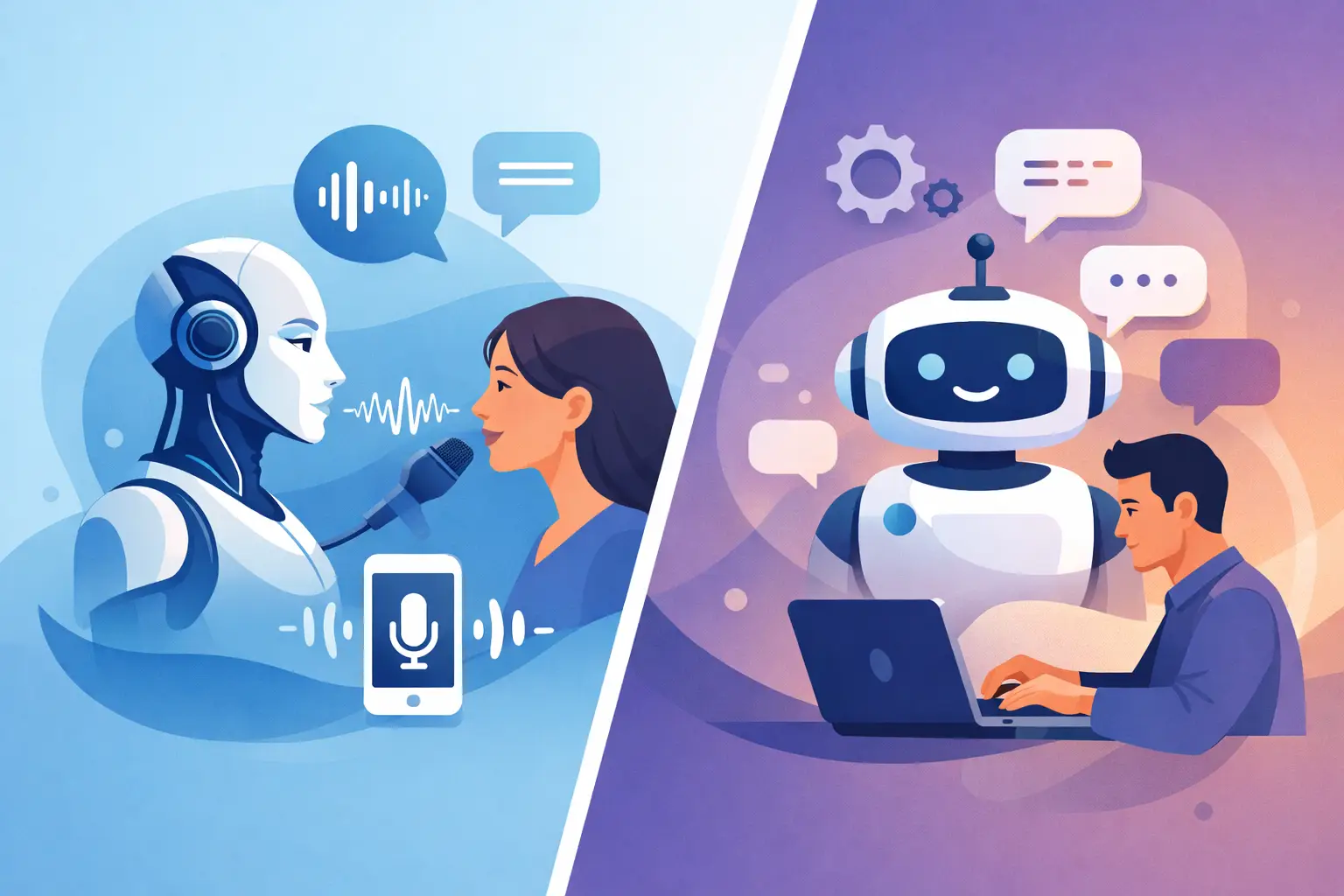
Chatbots were built for typed interaction. A user writes a question, the system processes text, and a reply appears on screen. That model works well when the customer is already on a website, in an app, or inside a messaging channel and is comfortable reading and typing.
Speech-to-speech AI is different at the architecture level. It listens to spoken language, interprets intent in real time, and responds with generated speech. The best systems are interruption-aware, low-latency, and designed for back-and-forth conversation rather than turn-based text exchange. That difference matters because voice interactions are less forgiving. Delays feel awkward. Flat responses feel robotic. Poor handoffs frustrate customers fast.
For operators, this is the real distinction: chatbots manage text workflows, while speech-to-speech AI manages live conversations.
Where chatbots still make sense
Chatbots are not obsolete. In many cases, they are still the right tool.
If customers are asking simple questions through web chat or WhatsApp, a chatbot can resolve common requests at low cost. Order status, password resets, pricing FAQs, business hours, and basic lead capture all fit the chatbot model well. Text also gives users a written record, which can be useful for product details, addresses, or policy explanations.
Chatbots are often easier to deploy for narrow use cases because the interaction pattern is controlled. The user types. The bot replies. If the workflow is decision-tree based or heavily structured, chatbot automation can produce quick wins.
The limitation shows up when speed, nuance, and conversational flow become more important than interface simplicity. A chatbot can answer questions. It cannot truly carry a phone conversation in the way a customer expects from a live service line.
Where speech-to-speech AI pulls ahead
Speech-to-speech AI is built for moments where customers want to talk, not type. That usually means phone support, inbound service calls, appointment booking, qualification calls, after-hours coverage, and situations where a customer is multitasking and needs answers now.
The biggest operational advantage is time. In voice channels, every delay increases friction. A low-latency speech agent can answer immediately, capture context as the caller speaks, and keep the conversation moving without forcing unnatural pauses. That makes the experience feel far closer to a human representative than older voice bots or text-based systems adapted for speech.
It also changes containment rates. A good voice agent can ask clarifying questions, handle interruptions, verify details, complete actions, and transfer to a human with context when needed. Instead of acting like a rigid front door, it becomes an actual service layer.
For businesses with recurring inbound volume, that means fewer missed calls, faster resolution, and less pressure on frontline teams.
The customer experience gap is bigger than most teams expect
Many buyers compare AI tools based on language quality alone. That is a mistake. In practice, the user experience depends on timing, channel fit, and how the system handles messy human behavior.
Text users tolerate a short pause. Callers usually do not. In chat, people often phrase questions cleanly. On the phone, they interrupt themselves, change direction, speak casually, and stack multiple requests into one sentence. A system designed for typed input can struggle in that environment, even if the underlying model is strong.
This is why speech to speech AI vs chatbots is not just a format change. It is a behavior change. Voice systems need to process audio directly, respond fast enough to feel natural, and manage turn-taking in a way that sounds conversational rather than scripted.
When that works, customer satisfaction tends to improve for one simple reason: the interaction feels efficient. Customers do not want to navigate a maze. They want to say what they need and get it handled.
Cost, staffing, and ROI
From a business perspective, both technologies can reduce workload. The better investment depends on where your volume lives.
If most demand comes through web chat, messaging, or in-app support, chatbots can lower ticket volume without major operational changes. They are especially useful for deflecting repetitive text inquiries before they reach a live agent.
If your business is phone-heavy, chatbots solve the wrong problem. They may improve digital support while your call queue remains overloaded, your after-hours line goes unanswered, and your team spends time on repetitive phone tasks that should be automated.
Speech-to-speech AI directly targets labor-intensive call workflows. It can answer every inbound call, qualify leads, book appointments, provide order updates, collect information, and escalate when necessary. That creates a clearer path to labor savings and availability gains, especially in industries where missed calls equal lost revenue.
Healthcare clinics, real estate teams, e-commerce support desks, and service businesses often see this quickly. A missed message in chat may be recoverable. A missed phone call often is not.
Implementation trade-offs to think about
This is where the decision becomes more nuanced. Chatbots are generally simpler when the workflow is text-first and low-risk. They can be easier to QA, easier to monitor in written form, and less sensitive to latency.
Speech-to-speech AI has higher performance demands. It requires strong telephony handling, real-time model orchestration, voice quality, interruption management, call routing, and reliable integrations with CRMs, calendars, and backend systems. If any of those pieces are weak, the customer will hear it immediately.
That does not mean voice is harder to justify. It means the bar is higher. Teams should evaluate not just whether a vendor offers AI voice, but whether the system can actually support live operations at production quality.
Ask practical questions. How fast is response time? Can it transfer calls intelligently? Can it use your existing providers? Can it push structured data into your workflows? Can you control prompts, routing, escalation logic, and business rules without rebuilding your stack?
The right voice platform should improve operations, not create a new integration project that slows everything down.
Speech to speech AI vs chatbots by use case
For support, chatbots are effective when customers are already online and the issue is straightforward. Voice AI is stronger when urgency is high, when customers prefer calling, or when resolving the issue requires a natural back-and-forth.
For sales, chatbots can qualify inbound website traffic. Speech-to-speech AI is better for speed-to-lead on phone channels, inbound qualification, and appointment setting where conversational momentum matters.
For service operations, chatbots help with updates and simple routing. Voice agents are better for rescheduling, status checks, intake, and after-hours coverage where the customer expects immediate spoken assistance.
For global or regional businesses serving customers across channels, this is rarely an either-or choice. The smarter model is channel-based automation: use chatbots where text is native, and use speech-to-speech AI where voice is the channel that actually drives outcomes.
What buyers should do next
Start with channel data, not AI hype. Look at where your inbound demand is coming from, which interactions repeat most often, and where delays cost you money. If your highest-friction workflows happen over the phone, a chatbot will not fix them. If your service load is mostly text-based, a voice deployment may be more than you need right now.
Then look at the experience you want to deliver. Customers do not care whether your automation is text or voice. They care whether it is fast, accurate, and easy. The channel should match the moment.
That is why platforms like Kalem focus on direct, low-latency voice automation for businesses that need real conversations, not just automated replies. When the goal is to handle calls naturally, integrate into live operations, and keep human escalation available, voice becomes a performance decision, not a novelty.
The useful question is not which technology sounds more advanced. It is which one removes friction from the customer journey and turns repetitive demand into a faster, more scalable operation.