How to Train an AI Voice Agent That Works
Learn how to train an AI voice agent for real customer calls, with prompts, workflows, testing, and tuning for speed, accuracy, and ROI.
On this page
A voice agent can sound impressive in a demo and still fail on live calls. It interrupts at the wrong time, misses customer intent, gives overly long answers, or gets stuck when a caller goes off script. That gap is exactly why teams ask how to train an AI voice agent in a way that actually improves service levels, not just novelty.
Training a voice agent is not the same as training a text chatbot. Phone conversations are faster, messier, and less forgiving. People change topics mid-sentence, speak with background noise, ask for exceptions, and expect immediate answers. If your system cannot handle interruptions, ambiguity, and escalation cleanly, customers feel it right away.
For most businesses, the goal is straightforward: reduce handle time, improve availability, lower support cost, and still protect the customer experience. That means training should focus less on generic AI behavior and more on operational performance. The best voice agents are not the ones that know everything. They are the ones that know what to say, when to say it, and when to hand off to a human.
What training an AI voice agent actually means
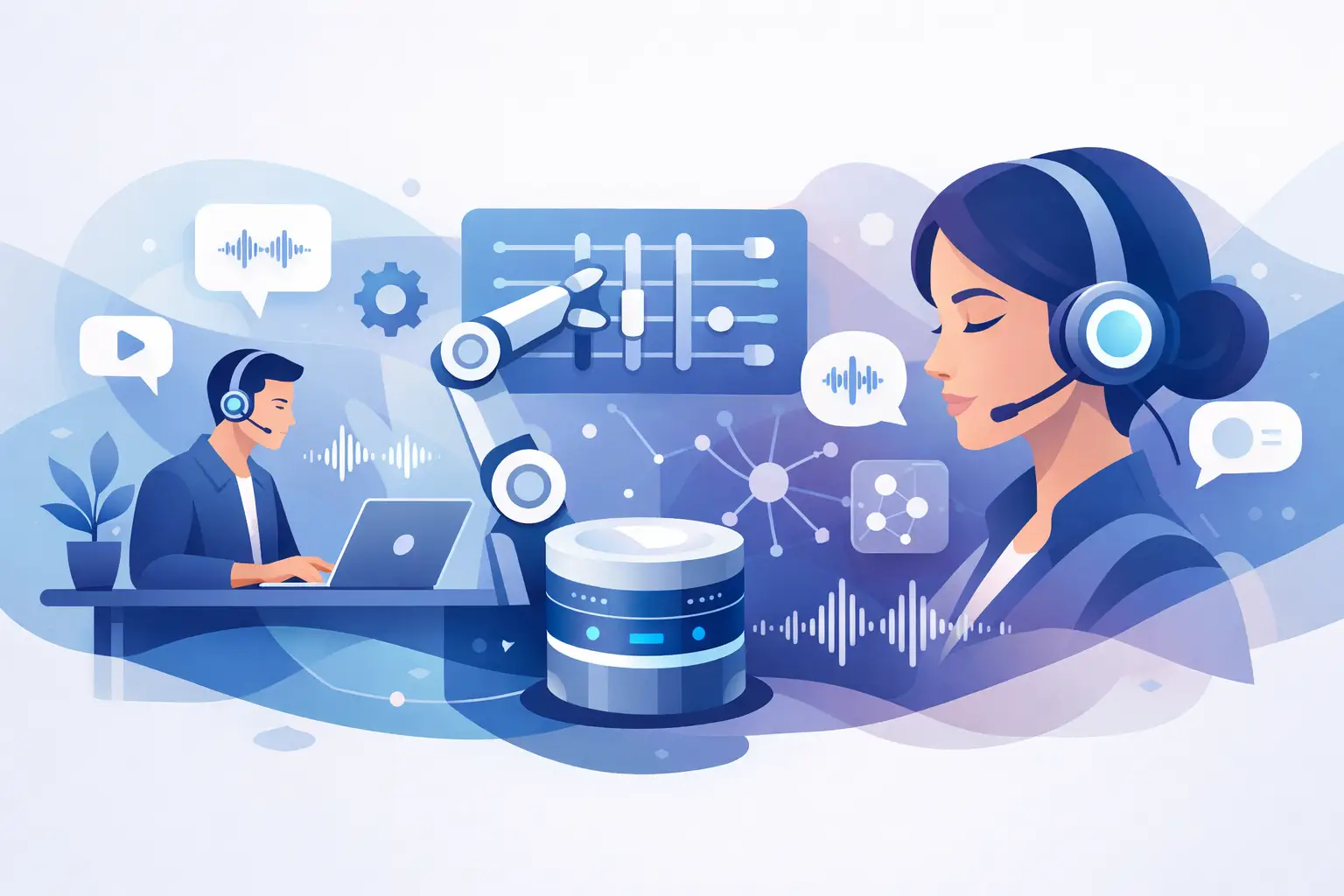
When business teams talk about training, they often picture feeding the model documents and hoping it learns the job. In practice, training has four parts: defining the agent's role, shaping how it speaks, connecting it to trusted business data, and tuning it against real call behavior.
The role is the operational boundary. Is the agent handling appointment scheduling, order tracking, lead qualification, billing questions, or tier-one support? Narrow roles perform better because the system can stay focused. A general-purpose voice bot usually sounds capable until the call becomes specific.
The speaking style matters just as much. On voice, long answers feel slow. Overly formal phrasing sounds robotic. If your brand promises fast, natural service, the agent should respond in short, clear turns, confirm critical details, and avoid unnecessary filler.
Then there is data. A voice agent should not invent answers. It needs structured access to business systems such as CRMs, calendars, order databases, knowledge bases, and workflow tools. Training is partly about teaching the agent what it can trust and what it should never guess.
Finally, tuning is where performance is won or lost. You test calls, review failures, tighten prompts, refine fallback logic, and improve transfer rules. This is how a voice agent moves from “sounds smart” to “handles volume.”
How to train an AI voice agent for live operations
The fastest way to train well is to work backward from the call outcome you need. Start with one workflow that has clear business value and repeatable inputs. Appointment booking is a better starting point than “answer any customer question.” Order status is better than “full customer support.”
Once the use case is fixed, map the conversation path. Not every line needs to be scripted, but the structure should be intentional. What is the opening greeting? What details must be collected? Which system should be checked? What counts as success? What should trigger escalation?
This is where many teams overcomplicate things. You do not need a huge flowchart for every possibility. You need strong guardrails around the moments that matter most: identity verification, data capture, exception handling, and transfer to a human.
Start with real call data, not imagined scripts
If you already receive inbound calls, your best training material is sitting in your own operation. Review call recordings, transcripts, chat logs, and support tickets. Look for recurring intents, common objections, repeated questions, and the phrases customers actually use.
This matters because callers rarely speak in the polished language found in SOP documents. They say, “I need to move my appointment,” not “I would like to reschedule my service window.” Your voice agent should be trained on natural language patterns from your customer base, including regional phrasing, pauses, corrections, and incomplete sentences.
A short, high-quality dataset beats a large messy one. Fifty real examples of successful appointment reschedules are more useful than five hundred generic support articles.
Write prompts for speed and control
Prompt design is a major part of training. A good system prompt should define the agent's role, goal, tone, limits, and recovery behavior. It should tell the agent to keep answers brief, ask one question at a time, confirm sensitive details, and escalate when confidence is low.
For voice, brevity is performance. A response that looks helpful in text can feel painfully slow over the phone. Train the agent to use concise language such as, “I can help with that. What order number do you have?” instead of long explanatory paragraphs.
It also helps to specify how the agent should behave under pressure. If the caller interrupts, should it stop and listen? If the caller sounds frustrated, should it acknowledge that and move faster? If a request falls outside policy, should it explain the limit once and offer transfer? These behaviors should be explicit.
Connect the agent to systems it can act on
A voice agent becomes commercially useful when it can do more than talk. It should retrieve order data, check calendar availability, create CRM entries, send follow-up messages, update tickets, and route calls based on context.
This is where many deployments either become efficient or become expensive. If the agent cannot complete the task inside the call, your team still carries the operational load afterward. Training should therefore include tool usage rules: when to query a system, what fields are required, what to do when data is missing, and how to confirm actions before execution.
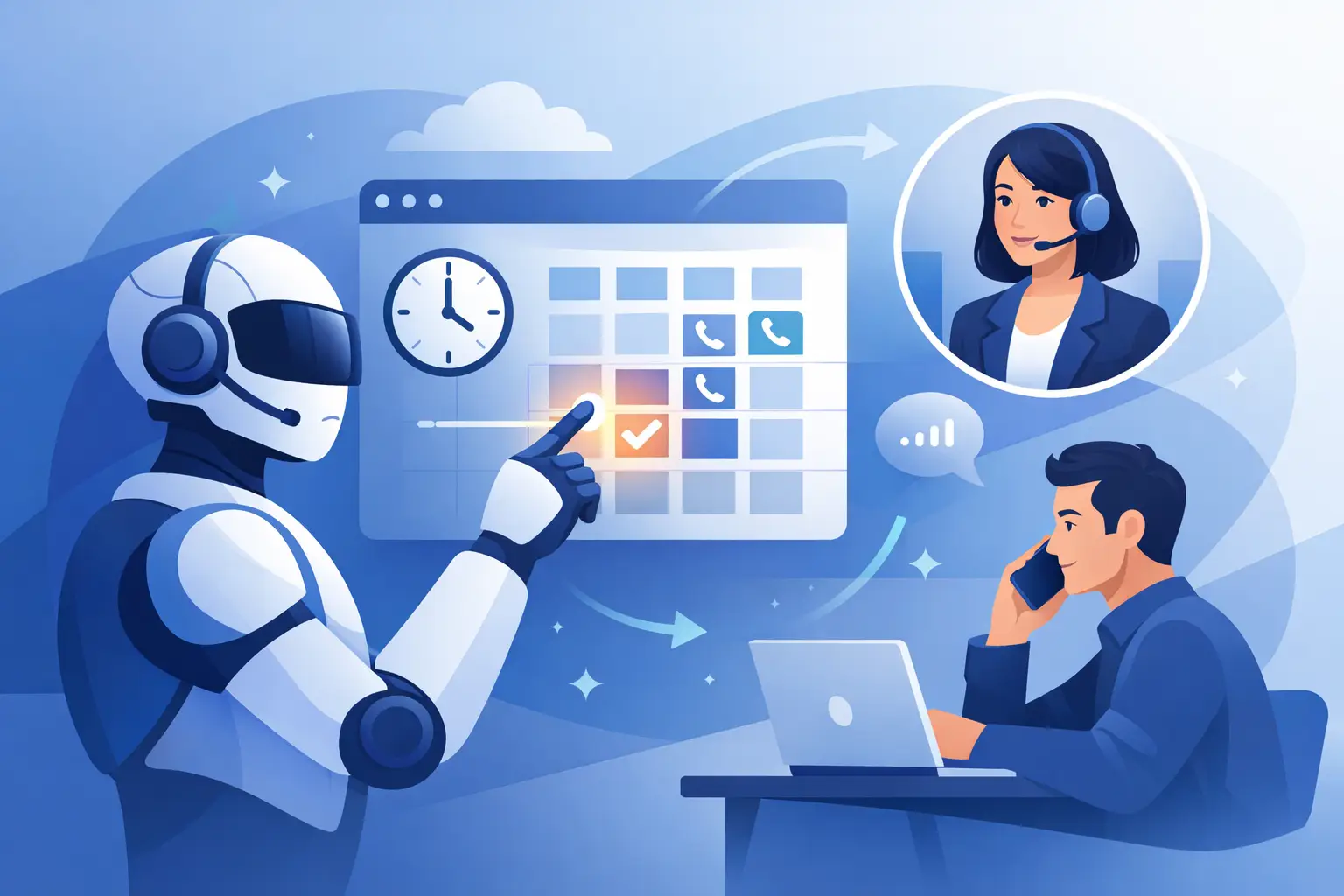
For example, if the agent books appointments, train it to verify name, time zone, and contact number before submitting. If it qualifies leads, define the exact fields that make a lead sales-ready. Precision here protects downstream teams.
Train for edge cases, not just happy paths
The happy path is easy. The real value comes from handling deviations without breaking the experience.
Customers speak over the agent. They ask two questions at once. They provide partial information. They change their mind midway through the call. They ask for a human before answering anything. They mention urgency, refunds, complaints, or compliance concerns. If your training ignores these moments, the deployment will look fine in testing and weak in production.
The right approach is to create edge-case scenarios based on real operational risk. Test angry callers, low-confidence speech recognition, noisy environments, repeated interruptions, unsupported requests, and policy exceptions. Then train the agent to recover cleanly.
Sometimes recovery means clarifying. Sometimes it means narrowing the choice. Sometimes it means transfer. There is no single best response. It depends on the cost of being wrong. In healthcare scheduling, a wrong answer can create serious operational issues. In lead qualification, a slightly imperfect response may be acceptable if the call still gets routed correctly.
Human handoff is part of training
Escalation is not failure. Poor escalation is failure.
A well-trained voice agent knows when confidence is low, when sentiment drops, when the caller requests a person, or when policy requires human review. It should transfer with context, not dump the call cold. That means passing along the summary, captured data, and reason for transfer so the human agent does not restart the conversation.
This is one of the clearest differences between a cost-saving system and a customer-frustrating one. Smart handoff protects experience while still automating high-volume routine work.
Measure the right things after launch
If you want to know whether your training is working, do not stop at call completion rate. That metric can hide weak interactions.
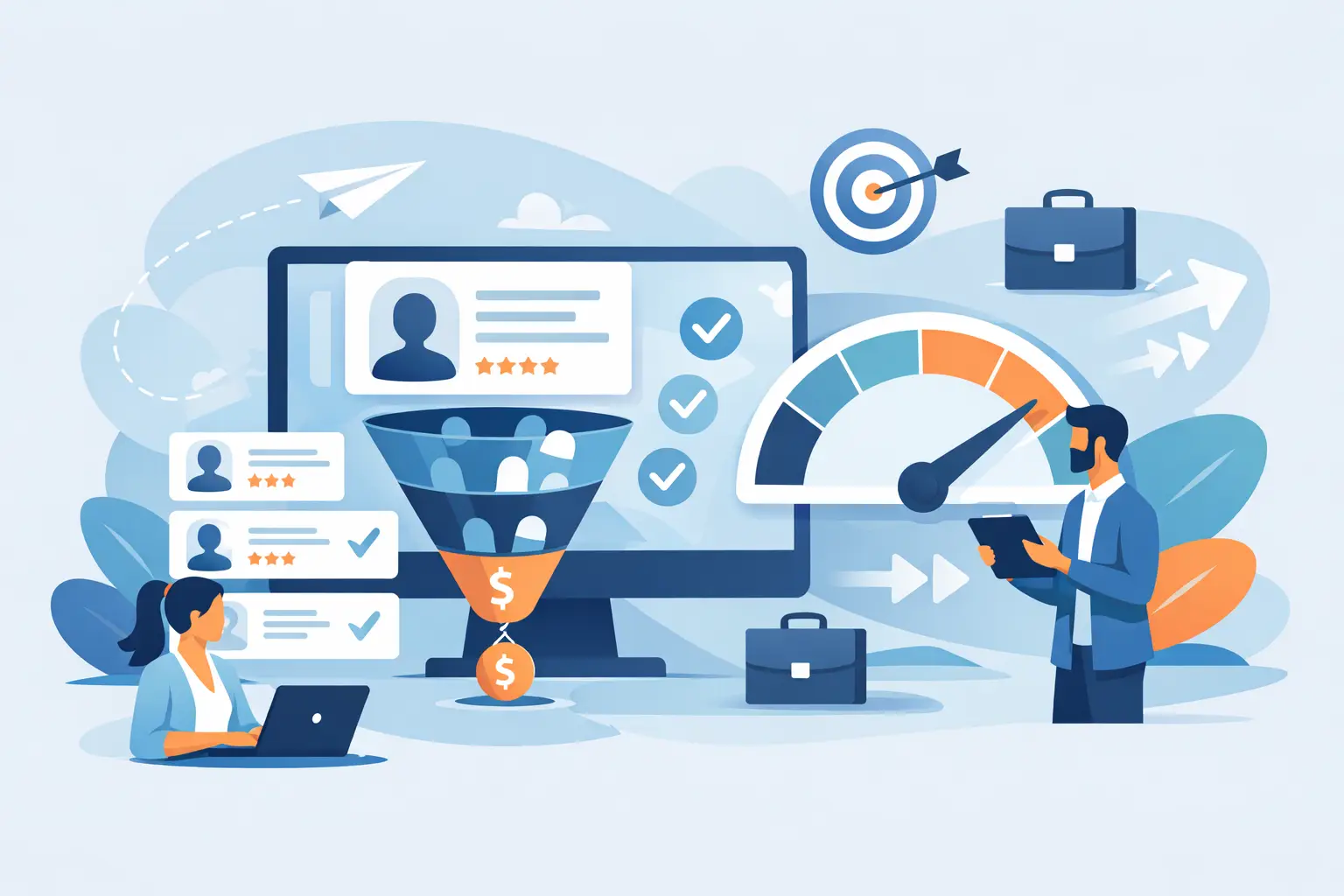
Track containment rate, average handle time, transfer rate, successful task completion, booking accuracy, lead qualification accuracy, and customer drop-off points. Listen to real call samples each week. You are looking for patterns: where does the agent hesitate, overtalk, repeat itself, or miss intent?
This feedback loop is where teams build a serious advantage. A voice agent is not trained once and finished. It improves through constant tuning. Adjust prompts. Refine tool logic. Expand approved knowledge. Tighten fallback responses. Remove wording that slows the call down.
If your operation has enough volume, segment performance by use case, region, and call source. The way you train for e-commerce order tracking may not match what works for healthcare intake or real estate lead capture.
The fastest path to a good voice agent
If speed matters, start narrow, train on real conversations, integrate the systems that matter, and optimize for live-call behavior rather than demo polish. That is how you get an agent that sounds natural and performs under pressure.
Platforms built for real-time conversational AI can shorten this process significantly. With the right infrastructure, teams can deploy faster, test faster, and improve faster because latency, interruption handling, and workflow integration are already designed for production use. That is the difference between a voice experiment and an operational channel.
A good voice agent does not need to sound perfect. It needs to be fast, clear, accurate, and smart enough to know its limits. Train for that, and the ROI usually follows.