AI Voice Agents for Home Services That Convert
AI voice agents for home services help book jobs, answer calls, and cut overhead with faster response times and more natural customer chats.
On this page
- Why ai voice agents for home services are gaining traction
- What good voice automation looks like in home services
- Where ai voice agents for home services can fail
- How to evaluate a platform without getting distracted by demos
- The business case is bigger than labor savings
- What implementation should look like
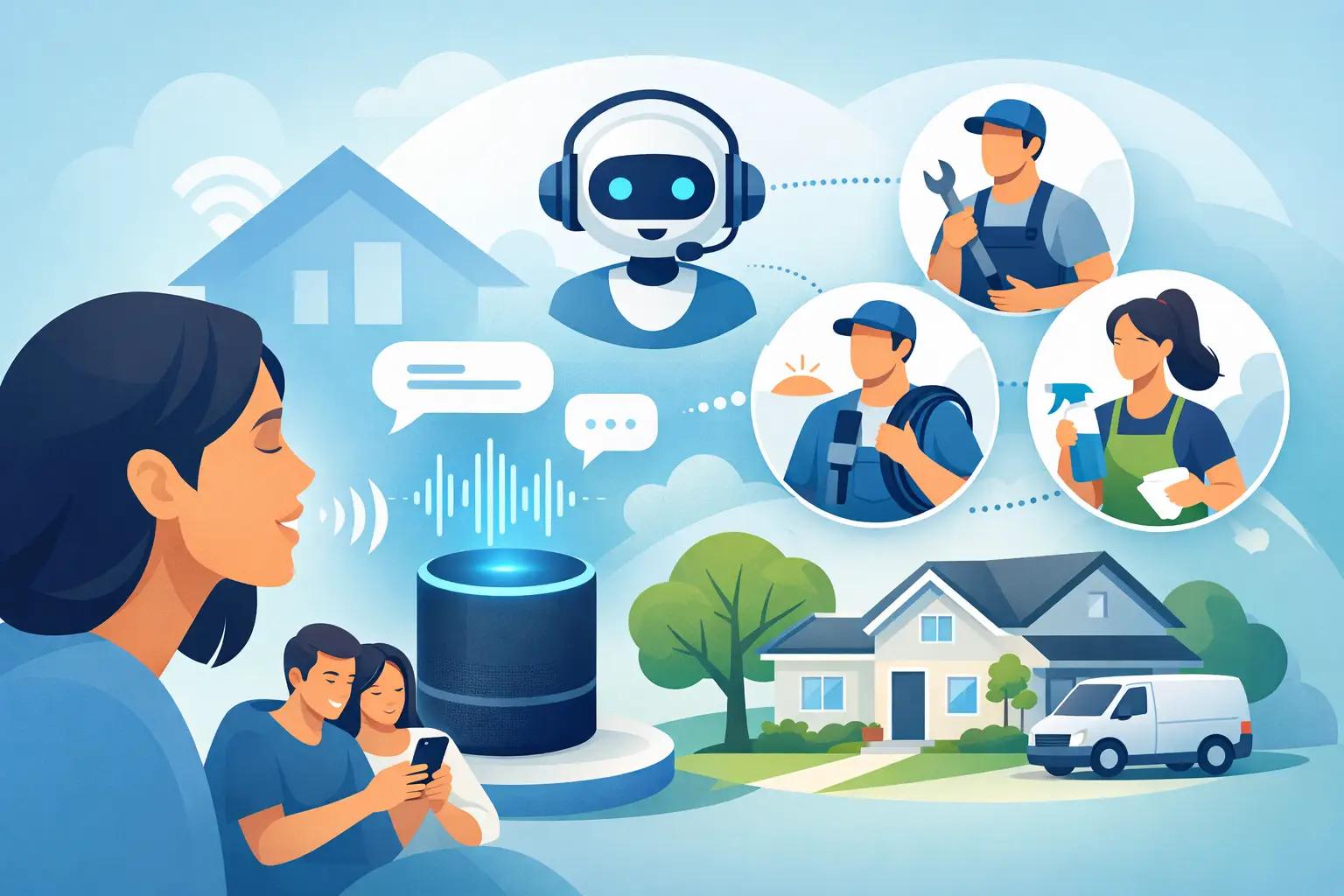
A missed plumbing call at 8:12 a.m. can turn into a booked competitor by 8:14. That is the real case for ai voice agents for home services. In this category, speed is not a nice-to-have. It decides who wins the job, who fills the schedule, and who keeps dispatch from turning into a daily bottleneck.
Home service businesses run on inbound demand, repeat scheduling, and urgent customer intent. The problem is that call volume is uneven, staff coverage is limited, and most legacy phone systems still create friction at the exact moment a customer wants help. A caller with a leaking water heater does not want to press three buttons, leave a voicemail, and wait. They want an answer now, a time window now, and confidence that someone is actually coming.
That is where voice AI starts to matter. Not as a novelty, and not as a robotic IVR replacement with better branding. The real opportunity is using conversational voice agents that can answer instantly, qualify the job, collect service details, book appointments, and transfer edge cases to a human when needed.
Why ai voice agents for home services are gaining traction
Home services has all the conditions that make voice automation commercially valuable. Calls are frequent. Many are repetitive. A large share happen after hours, during peak periods, or when office staff are already tied up. And unlike some industries, every missed interaction has clear revenue impact.
If you run HVAC, plumbing, electrical, pest control, garage door, appliance repair, or cleaning operations, the economics are straightforward. Every inbound call requires labor, but not every call requires a person. Customers often need the same handful of outcomes: book service, reschedule, confirm availability, ask about pricing, check arrival windows, or explain an issue. Those workflows are structured enough for automation, but still conversational enough that old-school phone trees usually underperform.
The shift now is that newer voice agents can handle these interactions in real time with far more natural pacing. They can detect interruptions, manage turn-taking, and respond quickly enough that the call feels fluid rather than scripted. That matters because customer tolerance for bad phone automation is low, especially in urgent service categories.
What good voice automation looks like in home services
A useful voice agent does not try to impersonate a full-service operations manager. It handles high-volume, high-repeat conversations exceptionally well and exits cleanly when the situation calls for a person.
For a home service team, that usually means answering every inbound call, capturing the caller’s need, checking service area, identifying urgency, and moving the customer toward the next best action. That action might be booking a slot, creating a lead record, sending details to dispatch, or transferring to a live rep.
The best setups also connect directly to the systems your team already uses. Calendar availability, CRM records, dispatch tools, ticketing platforms, and webhook-based workflows all matter here. Without that layer, a voice agent can sound impressive but still create manual cleanup. In practice, the business value comes from reducing operational drag, not just sounding human.
The highest-impact use cases
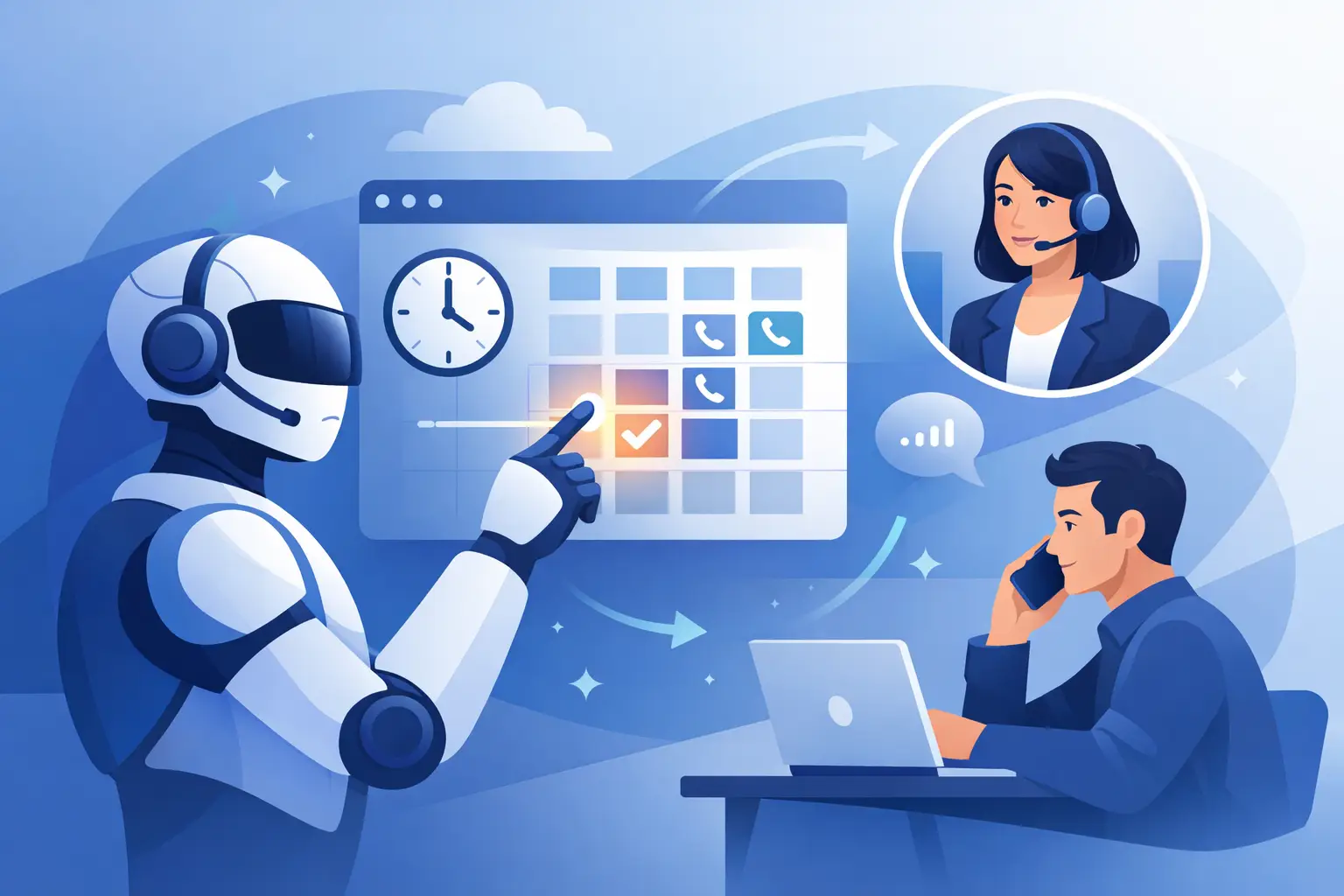
Appointment booking is usually the fastest win. If the agent can collect address, issue type, preferred timing, and contact details while checking calendar rules, you remove a major source of hold times and missed calls.
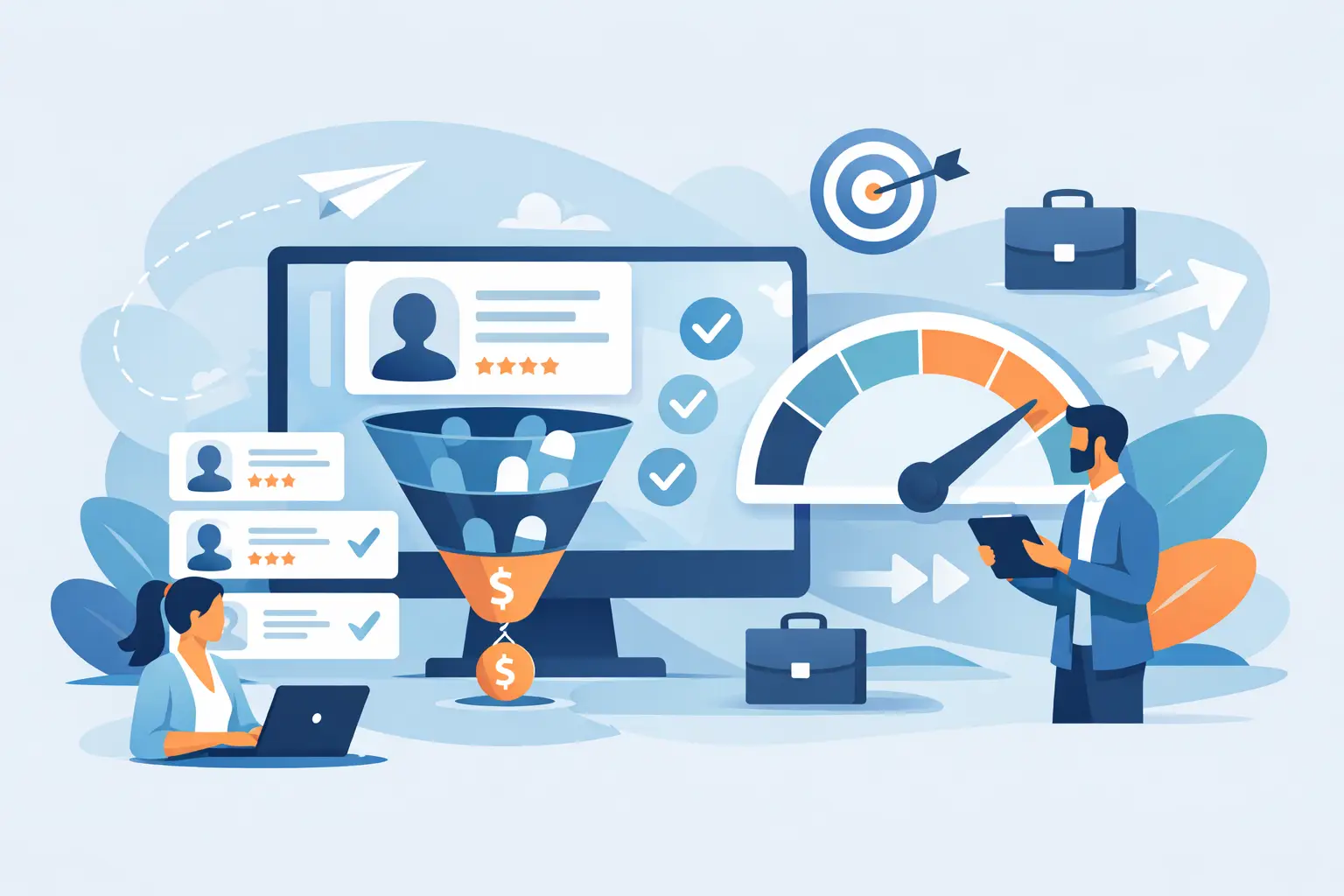
Lead qualification is another strong fit. A voice agent can ask whether the caller is a homeowner or property manager, whether this is a new install or repair, whether the property is in the service area, and whether the issue is urgent. That lets your team prioritize high-value jobs instead of spending staff time on calls that will never convert.
After-hours coverage is often the most immediate ROI case. Many home service companies pay for ads and local search visibility around the clock but only answer phones during business hours. That gap is expensive. A voice agent can pick up instantly at night, on weekends, and during overflow periods when your front desk is maxed out.
Rescheduling, status updates, and basic FAQs also matter more than many operators think. These are low-complexity calls that still consume a meaningful share of office time. Automating them frees humans for exceptions, upsells, and service recovery.
Where ai voice agents for home services can fail
Not every voice AI deployment improves operations. Some create a new layer of frustration if the design is wrong.
The first failure point is latency. If the system pauses too long between turns, customers assume the line is broken or the bot is confused. In voice, speed shapes trust. The second issue is rigidity. Home service callers often explain problems in messy language. If the agent can only handle exact phrasings, containment drops fast.
There is also a handoff problem. Some vendors treat escalation as a fallback after the bot has already annoyed the caller. That is backwards. A strong voice system should recognize when confidence is low, when the customer is upset, or when the workflow moves outside policy, then transfer quickly with context.
This is why direct audio processing, interruption awareness, and smart routing matter. They are not technical extras. They directly affect whether customers stay on the line long enough to book.
How to evaluate a platform without getting distracted by demos
Most demos sound good in a controlled setting. The better question is whether the system holds up during real call volume, real accents, real background noise, and real operational complexity.
Start with response speed. If conversations feel delayed, the customer experience will break under pressure. Then look at configuration depth. Can you define service areas, booking logic, emergency routing, and escalation rules without turning the rollout into a custom development project?
Integration flexibility is another dividing line. Home service teams often use a patchwork of CRMs, scheduling tools, telephony providers, and internal workflows. If the voice layer cannot plug into that environment, staff ends up duplicating work. That kills efficiency gains.
You should also ask how the platform handles ownership and scale. Some businesses want self-serve control with usage-based economics. Others need managed deployment, compliance support, and SLA-backed reliability. The right answer depends on your internal team, call volume, and tolerance for implementation lift.
The business case is bigger than labor savings
Yes, cost reduction matters. If voice agents absorb repetitive inbound calls, staffing pressure drops and front-office efficiency improves. But the larger upside is revenue protection and speed to response.
For home services, the first company to answer often becomes the first company invited on-site. Faster response means more booked jobs. Better qualification means your techs spend time on the right work. Consistent after-hours coverage means your marketing budget keeps performing when the office is closed.
There is also a brand effect. Customers do not judge your operation by your org chart. They judge it by whether someone answers, understands the issue, and helps them move forward. A natural, interruption-aware voice agent can improve that moment far more than a voicemail box or a static IVR ever will.
What implementation should look like
A practical rollout starts narrow. Pick one or two high-volume workflows, such as inbound booking and after-hours overflow. Define the call paths, escalation conditions, and system integrations. Measure answer rate, booking rate, transfer rate, average handling time, and jobs saved from missed calls.
From there, expand into rescheduling, lead qualification, and status inquiries. The goal is not to automate everything at once. It is to automate the interactions where speed, consistency, and coverage create immediate operational leverage.
That is also where platforms like Kalem fit well. If you can deploy quickly, connect your existing tools, and run natural phone conversations with low latency, you reduce the time between pilot and actual business impact.
Home services is not waiting for perfect AI. It is buying faster response, better coverage, and fewer missed revenue moments. If your phones are still creating drag, that is the place to fix first.