AI Voice Agents for Healthcare That Work
AI voice agents for healthcare help providers cut hold times, automate scheduling, and improve patient access without losing human handoff.
On this page
A missed call in healthcare is rarely just a missed call. It can mean an unbooked follow-up, a medication question that goes unanswered, or a patient who gives up and goes elsewhere. That is why ai voice agents for healthcare are getting real attention from operators, not just innovation teams. When implemented well, they reduce front-desk pressure, improve access, and keep phone-based patient journeys moving without forcing every interaction through a live staff member.
Healthcare is a strong fit for voice automation because demand is repetitive, time-sensitive, and still heavily phone-driven. Patients call to confirm appointments, reschedule visits, ask about office hours, check insurance basics, request prescription refill routing, or find the right department. Most of these conversations follow known patterns. The issue is not whether they can be handled faster. The issue is whether they can be handled naturally, accurately, and with a safe path to a human when needed.
Where AI voice agents for healthcare create value
The clearest win is access. Many clinics and provider groups still lose calls during peak hours, after hours, lunch breaks, and seasonal surges. Hiring enough staff to cover every spike is expensive. Leaving patients in long queues is worse. Voice agents give healthcare teams a way to answer every inbound call instantly, 24/7, while keeping staff focused on exceptions rather than routine intake.
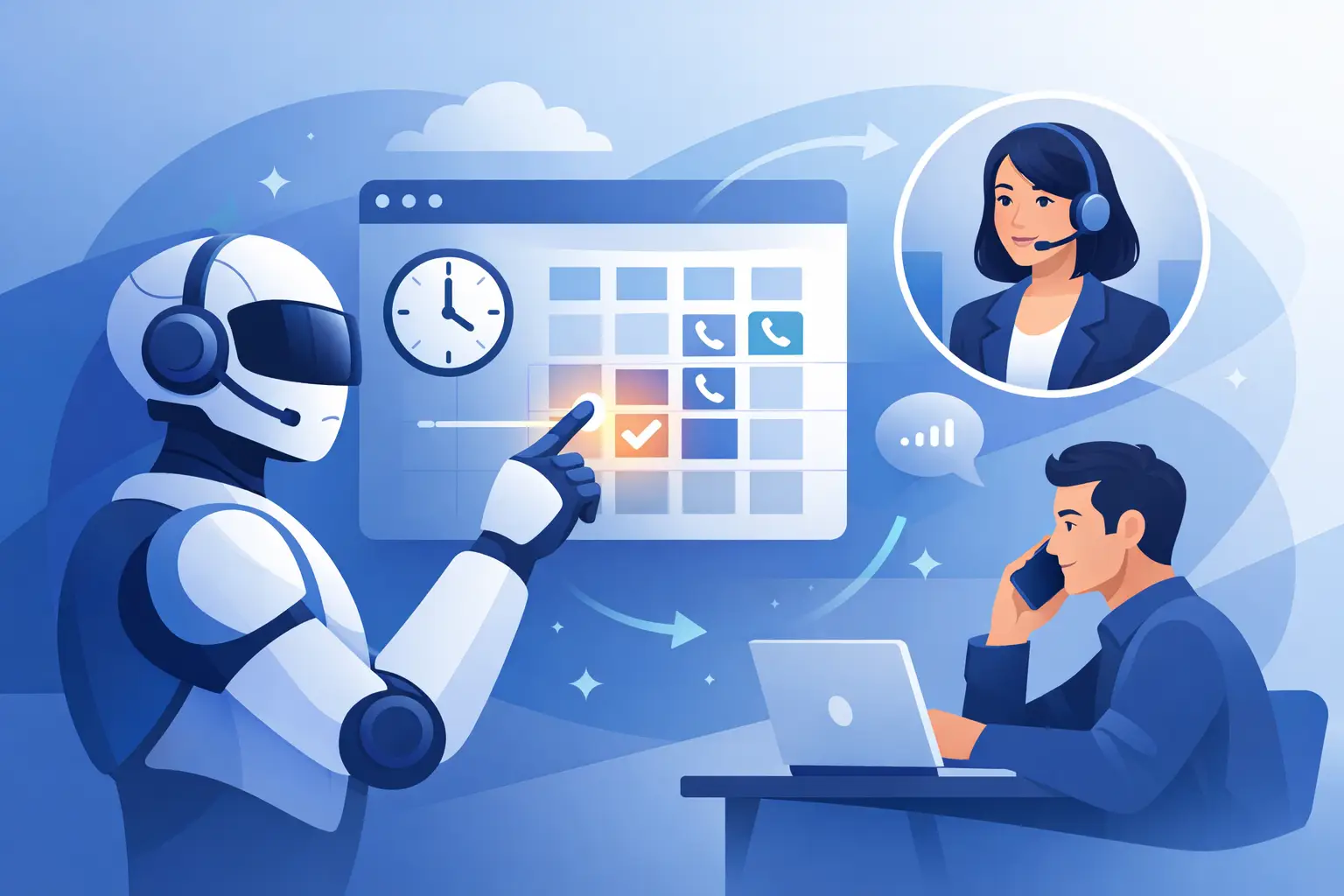
Scheduling is usually the first workflow to automate because the operational upside is immediate. A voice agent can confirm identity, offer available time slots, book or modify appointments, send reminders, and escalate edge cases to staff. That lowers call volume for front-desk teams and shortens time to booking for patients. In practices where speed matters, even a small reduction in abandoned calls can translate into more completed visits and better calendar utilization.
The second big use case is call routing. Many healthcare calls do not need a full conversation with a receptionist. They need the right destination on the first try. A capable voice agent can identify intent quickly and transfer the caller to billing, referrals, lab coordination, a nurse line, or an on-call service. That sounds simple, but it has a direct effect on staff efficiency because fewer calls bounce between departments.
After-hours coverage is another practical fit. Patients still call outside business hours, and voicemail is a weak experience when the need feels urgent. Voice agents can collect callback details, provide approved informational responses, direct patients to emergency instructions when appropriate, and route urgent-but-nonemergency cases based on workflow rules. Not every healthcare organization will allow broad automation here, and they should be cautious, but even limited after-hours handling can improve response speed without adding overnight staffing.
What separates useful healthcare voice AI from a bad phone tree
Healthcare buyers are right to be skeptical. A lot of voice automation still feels slow, rigid, and easy to confuse. Patients interrupt. They change their mind mid-sentence. They use vague language. They answer with context instead of simple yes-or-no responses. If the system cannot keep up conversationally, adoption drops fast.
That is why latency and turn-taking matter more than many teams expect. A voice agent that responds in near real time feels less like an IVR and more like a competent first-line operator. The difference is not cosmetic. It affects call completion, caller trust, and how often patients ask for a human immediately. Interruption handling matters too. In healthcare, callers often speak emotionally or provide too much information at once. A system needs to recognize that without derailing the interaction.
The best healthcare implementations also avoid trying to automate everything. That is usually where projects fail. If a patient is discussing symptoms, test results, or anything clinically sensitive, the workflow should move to the right human path quickly. Voice AI works best when the boundaries are clear: automate repetitive administrative tasks, support patient access, and escalate early when clinical nuance or policy risk appears.
How to evaluate AI voice agents for healthcare
Start with workflow fit, not with the model demo. A polished conversation sample means very little if the agent cannot connect to your scheduling system, CRM, contact center software, or internal escalation logic. In healthcare operations, integration is what turns a voice agent from a novelty into infrastructure.
Look closely at the first three workflows you want to automate. If they are appointment scheduling, appointment confirmation, and department routing, define what success actually means. Is it lower average hold time, fewer missed calls, more appointments booked, reduced front-desk workload, or better after-hours coverage? The answer will shape setup, prompts, integrations, and reporting.
Then assess handoff quality. Human transfer is not a failure state in healthcare. It is a requirement. A strong system should pass context forward so staff are not forced to restart the conversation from zero. If the voice agent gathered the patient name, intent, preferred time, and callback number, the live team should receive that data with the transfer. That saves time and reduces frustration on both sides.
Compliance and control also matter, but this is where teams should stay practical. Not every organization needs the same deployment model, access controls, or infrastructure ownership. A small practice may want the fastest path to value. A larger provider group may want more control over credentials, telephony, workflows, and data handling. It depends on internal policy, risk posture, and IT maturity. The important point is flexibility. Healthcare teams should not be forced into a one-size-fits-all setup.
Common use cases that make sense first
Most healthcare organizations should begin with high-volume, low-complexity calls. Appointment booking and rescheduling are obvious candidates because they are repetitive and measurable. Reminder and confirmation calls are another natural fit, especially for specialties where no-shows hurt revenue and throughput.
Referral intake can also be a strong use case if the workflow is structured. The agent can collect the needed information, confirm next steps, and route cases to the correct team. Billing inquiry triage often works well too when the goal is classification and routing rather than full dispute resolution.
Prescription-related calls require more caution. If the workflow is limited to routing refill requests or collecting basic details for staff follow-up, voice automation can help. If the expectation is medication counseling or anything that drifts into clinical guidance, human involvement should remain central.
The trade-offs healthcare teams should plan for
There is no serious voice AI deployment without trade-offs. The first is scope discipline. If you overload the agent with too many intents too early, accuracy drops and confidence falls with it. Narrower deployments often outperform ambitious ones because the conversation paths are cleaner and easier to monitor.
The second is language and caller variation. Healthcare serves a wide range of ages, speech patterns, accents, and emotional states. Teams should test with real call scenarios, not only internal stakeholders. What works in a controlled demo may break under background noise, hesitation, or incomplete answers.
The third is patient perception. Some organizations worry that automation will feel cold. That can happen if the voice sounds mechanical or the scripts feel defensive. But the opposite can also be true. Patients often prefer immediate assistance over waiting on hold for ten minutes. A natural-sounding voice agent with fast response times and a clear route to a person can improve the experience, not diminish it.
What implementation should look like
The fastest path is usually a focused launch with one or two workflows, clear escalation rules, and measurable KPIs. Get the call flows right, connect the systems that matter, and monitor transcripts, completion rates, transfers, and failure patterns. Then expand.
This is where platforms built for speed and operational flexibility have an advantage. A system like Kalem is designed for fast deployment, natural speech-to-speech interactions, and human handoff when the conversation needs it. For healthcare operators, that matters because long implementation cycles kill momentum. If your team can stand up a voice workflow quickly, test it on real traffic, and refine based on outcomes, adoption becomes much easier to justify.
Healthcare does not need more phone automation that traps callers in menus. It needs a faster front line - one that can answer instantly, sound natural, complete routine work, and know when to bring in a person. That is the real promise of voice AI here. Not replacing care, but removing friction around it.